
One-Pan Arroz con Pollo with Peas and Peppers
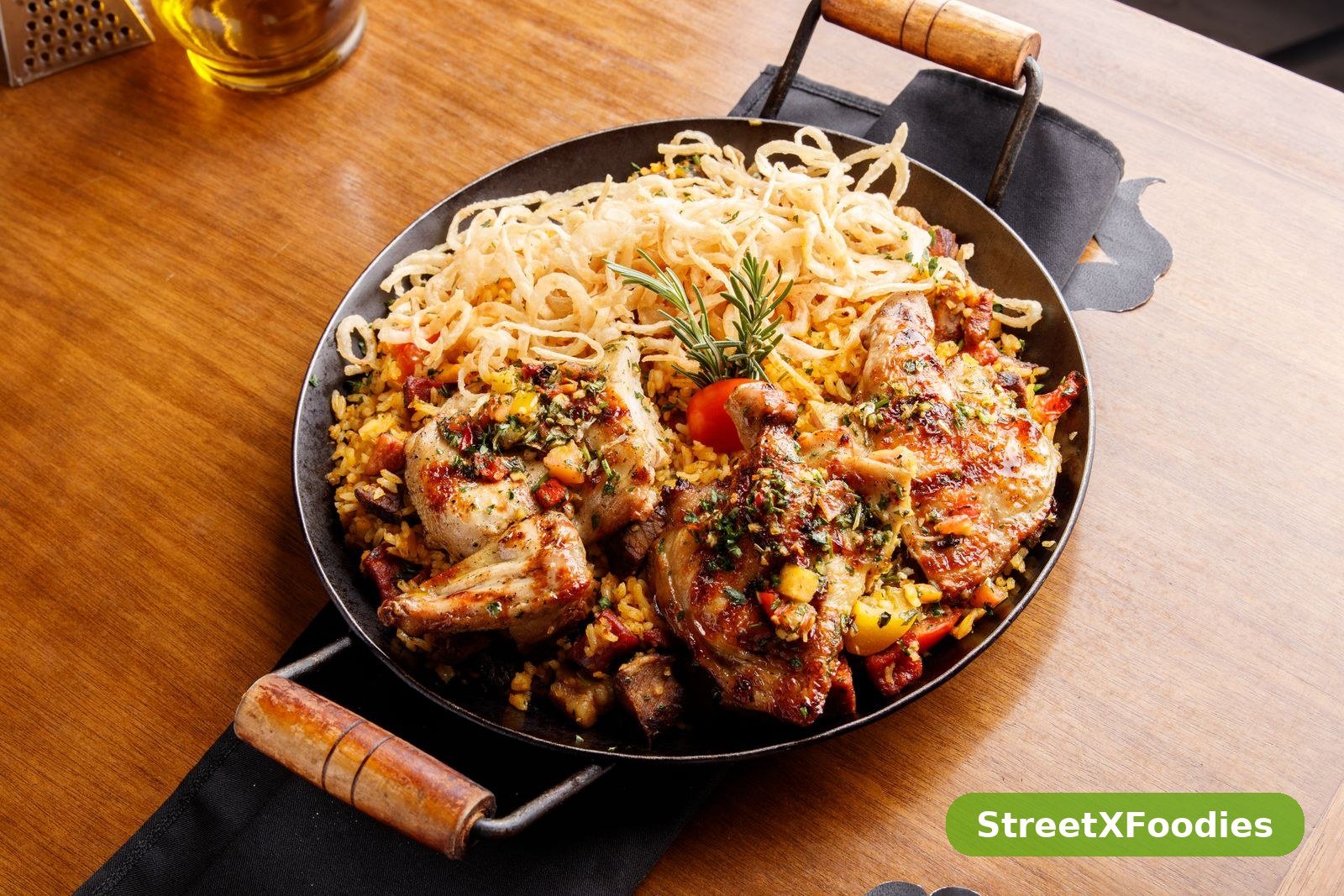
There are some dinners that just smell like home, even if home is a place you have never actually lived. Arroz con pollo is one of those for me. The moment the chicken starts browning in the pan and the saffron hits the hot broth, the whole kitchen fills with this warm, golden, slightly smoky smell that makes everyone drift toward the stove asking when dinner will be ready. It is the kind of smell that promises something good, and this dish delivers on that promise every single time.
I first had arroz con pollo at a friend’s house years ago, and I remember thinking how unfair it was that something so simple could taste so complete. One pan, chicken, rice, peppers, peas, and a handful of spices, and somehow it came out tasting like a celebration. I asked for the recipe, of course, and she laughed and told me there was not really a recipe, just the way her mother made it. That is the thing about arroz con pollo. Every family has their own version, and every version is the right one. The one I am sharing today is mine, built from years of making it, tweaking it, and learning what actually matters and what does not.
What I love about this version is that it is honest food. Nothing fancy, nothing you need a special trip to the shops for, and no technique that requires a cooking degree. You brown the chicken, soften the peppers, stir in the rice, pour in the broth, and let the pan do its quiet work. By the time you lift the lid, the rice is golden and fluffy, the chicken is fall-apart tender, and the peas and peppers are scattered through it like little jewels. It feeds a crowd, it reheats beautifully, and it only dirties one pan. On a busy weeknight, that last part matters more than I would like to admit.
This is also the dinner I make when I want the table to feel full without spending the whole evening in the kitchen. Everything goes into one wide pan, and while the rice simmers, I can set the table, make a quick salad, and actually sit down for a minute before dinner. It tastes like you spent hours on it, and it looks like something you would be proud to put in the middle of the table for guests. But really, it is a Tuesday-night dinner that just happens to be wonderful.
Why You’ll Love This Recipe
First, this is a true one-pan dinner, and if you are the person who cooks and cleans up, you already know how much that matters. The chicken browns in the pan, the peppers soften in the same pan, the rice toasts in the same pan, and the broth simmers in the same pan. Every layer of flavour builds on the one before it, and at the end of the night there is one pan to wash and a full, happy table. That is a trade I will make every single time.
You will also love how forgiving this recipe is. Arroz con pollo is not a dish that demands precision. If your peppers are a little bigger than mine, it still works. If you only have frozen peas, they work perfectly. If your chicken thighs are on the larger side, they just need a few more minutes in the pan. The rice is the only part that asks for a little attention, and even that is simple once you know the trick: leave it alone while it simmers, and let it rest before you fluff it. Do that, and you will get beautiful golden grains every time.
Then there is the flavour, which is warm and gentle rather than loud. The saffron gives the rice its beautiful golden colour and a soft, almost floral depth that you cannot quite put your finger on. The peppers add sweetness, the peas add little pops of green freshness, and the chicken, browned well and then braised in the rice, becomes so tender you can pull it apart with a fork. It is the kind of flavour that makes people go quiet for the first few bites, and then ask for the recipe.
It is generous, too. This recipe comfortably feeds four hungry people, and it stretches easily to six with a salad and some bread on the side. Leftovers are one of the best parts, because the rice only gets more flavourful overnight. And if you have children at the table, this is one of those rare dishes that pleases them and the adults at the same time, which anyone who cooks for a family will tell you is worth its weight in gold.
What Is Arroz con Pollo?
Arroz con pollo means chicken with rice, and it is one of those dishes that belongs to many places at once. You will find versions of it all across Latin America and Spain, from Cuba to Puerto Rico to Peru, and each one is a little different. Some use beer in the cooking liquid, some use annatto for colour, some add olives or capers, and some are made with saffron like mine. The dish has deep roots in Spanish cooking, and it travelled with Spanish settlers across the Atlantic, picking up local ingredients and habits in every country it landed in. If you want to read more about where it comes from and how it changes from country to country, there is a good overview on Wikipedia.
What all the versions share is the same idea: chicken and rice cooked together in one pan, so the rice absorbs the flavour of the chicken and the chicken stays moist from the steam. It is peasant food in the best sense, the kind of dish that was invented to feed a family well from simple ingredients, and it has survived for generations because it works. My version leans toward the Spanish style, with saffron, sweet peppers, and peas, and a good squeeze of lemon at the end. It is not claiming to be anyone’s grandmother’s exact recipe, and that is the point. Arroz con pollo belongs to whoever is making it.
If you have never made it before, do not be put off by the saffron. It sounds expensive and fancy, but you only need a small pinch, and a little jar lasts for ages in the cupboard. It is what gives the rice that gorgeous golden colour and a flavour that nothing else quite matches. If you really cannot find saffron, a teaspoon of turmeric will give you the colour, though the flavour will be a little different. I would still encourage you to try the saffron at least once. It is the ingredient that turns a good chicken and rice dinner into arroz con pollo.
Ingredients You’ll Need
- 8 bone-in, skin-on chicken thighs (about 2 pounds), patted dry
- 1 1/2 cups long-grain white rice, rinsed until the water runs mostly clear
- 1 large yellow onion, finely diced
- 1 red bell pepper, diced
- 1 green bell pepper, diced
- 1 yellow bell pepper, diced
- 4 cloves garlic, minced
- 1 cup frozen sweet peas
- 3 cups low-sodium chicken broth, warmed
- 1/2 cup dry white wine (or extra chicken broth)
- 1 can (14.5 ounces) diced tomatoes, drained
- 2 tablespoons olive oil
- 1 large pinch saffron threads (about 1/4 teaspoon)
- 1 teaspoon smoked paprika
- 1 teaspoon ground cumin
- 1/2 teaspoon dried oregano
- 1/2 teaspoon ground turmeric (optional, for extra colour)
- 1 bay leaf
- 1 teaspoon kosher salt, plus more to taste
- 1/2 teaspoon black pepper
- 1/4 cup chopped fresh cilantro or parsley, for serving
- Lemon wedges, for serving
How to Make One-Pan Arroz con Pollo with Peas and Peppers
Start by getting everything ready, because once the pan is hot, this dish moves along at a good pace and you do not want to be chopping peppers while the chicken is browning. Pat the chicken thighs very dry with paper towels, this matters more than you might think, because dry skin browns and wet skin steams. Season them generously on both sides with salt, black pepper, and half the smoked paprika. Dice the onion and peppers, mince the garlic, and rinse the rice in a fine sieve until the water runs mostly clear. Put the saffron threads in a small bowl with two tablespoons of warm water and let them steep while you cook. That little soak wakes the saffron up and helps its colour spread evenly through the rice.

Warm the olive oil in a large, deep skillet or a wide shallow pot over medium-high heat. A pan with a heavy bottom and a tight-fitting lid is ideal here, and it needs to be big enough to hold the chicken in a single layer with room for the rice underneath later. When the oil is shimmering, place the chicken thighs skin-side down and do not touch them. Let them brown properly for five to six minutes, until the skin is deeply golden and crisp. This is where so much of the flavour comes from, so do not rush it or crowd the pan. If your pan is on the smaller side, brown the chicken in two batches. Turn the thighs over and brown the other side for another three to four minutes, then lift them out onto a plate. They will not be cooked through yet, and that is exactly right. They will finish cooking in the rice.
Lower the heat to medium and add the onion and all three peppers to the same pan, in all that lovely chicken fat. Cook them slowly, stirring now and then, for about five minutes, until the onion is soft and sweet and the peppers have started to soften at the edges. The pan will look colourful and smell wonderful already. Stir in the garlic, the remaining smoked paprika, the cumin, oregano, and turmeric if you are using it, and cook for another minute until everything smells warm and fragrant. Be careful not to let the garlic burn. Burnt garlic turns bitter fast, and it is the one mistake that can follow you through the whole dish.
Now add the rinsed rice to the pan and stir it through the peppers and spices for about a minute, letting each grain get coated in that golden, oily mixture. This toasting step is small, but it makes a real difference. It helps the rice stay separate and fluffy later, and it gives the finished dish a deeper, nuttier flavour. Pour in the white wine and let it bubble for a minute, scraping the bottom of the pan with a wooden spoon to lift up all those browned bits. Those bits are pure flavour, so do not leave them stuck to the pan. Stir in the drained tomatoes, the warm chicken broth, the saffron with its soaking water, and the bay leaf. Season with the salt and give everything one good stir.
Nestle the browned chicken thighs back into the pan, skin-side up, pushing them down gently so they sit in the rice but the skin stays above the liquid. That way the skin stays crisp while the meat braises underneath. Bring the liquid up to a gentle boil, then turn the heat down to low, put the lid on, and let it simmer quietly for twenty minutes. Try not to lift the lid to peek, tempting as it is, because each peek lets out steam the rice needs to cook properly. Set a timer and walk away. Make a salad, set the table, or just enjoy the smell.
When the timer goes off, lift the lid and scatter the frozen peas over the top. Do not stir them in yet. Put the lid back on and cook for another five minutes. The peas will steam gently in the hot rice and stay bright green and sweet, instead of going dull and grey the way they do when they are boiled too long. After those five minutes, take the pan off the heat and let it rest with the lid on for ten minutes. This rest is not optional. It is when the rice finishes absorbing the last of the liquid, the grains firm up, and everything settles into itself. The chicken finishes cooking through in this time too.
Remove the bay leaf, then fluff the rice gently with a fork, folding the peas and peppers through it rather than stirring hard, which would break the grains. Taste a spoonful and adjust the seasoning. A little more salt, a pinch more cumin, or a good squeeze of lemon over the top can make all the difference at this stage. Scatter the chopped cilantro or parsley over the pan and serve it straight from the skillet while it is still steaming, with lemon wedges on the side. The first spoonful, with a piece of that crispy-skinned chicken and a forkful of golden rice, is the whole reason to make this dish.
Tips for the Best Arroz con Pollo
The single most important tip is to brown the chicken properly and to leave the skin on. Skinless chicken will still taste good, but you will lose the crisp golden skin that makes this dish special, and you will lose the fat that flavours the whole pan. Pat the thighs dry, season them well, and give them time in the hot pan without moving them. If the skin sticks when you try to lift a thigh, it is not ready yet. When it is properly browned, it will release from the pan on its own.
Use long-grain white rice, and rinse it well. Long-grain rice stays separate and fluffy, which is exactly what you want here, while short-grain rice can turn sticky and heavy. Rinsing washes away the excess surface starch that makes rice clump together, so do not skip that step even when you are in a hurry. A quick rinse in a sieve takes less than a minute and it makes a real difference to the final texture. And measure the broth carefully. Too much liquid and the rice goes soft, too little and it stays crunchy in the middle.
Keep the lid on while the rice simmers, and resist the urge to stir it. Stirring releases starch and breaks the grains, and lifting the lid lets the steam escape. A heavy, well-fitting lid is your best friend here. If your lid is a little loose, a sheet of foil tucked under it can help seal in the steam. And always let the finished dish rest for ten minutes before serving. That short pause is when the flavours settle and the rice reaches its best texture.
Check the chicken is cooked through before you serve it. The thighs should be tender and the juices should run clear, and the meat should be at least 165°F (74°C) at the thickest part. If you are not sure, a quick check with an instant-read thermometer takes the guesswork out of it. The USDA has a handy safe temperature chart that is worth bookmarking if you cook chicken often, and you can find it on the USDA Food Safety site. It is one of those things that is easy to forget and even easier to look up.
Finally, taste and adjust at the end. Different broths have different levels of salt, and saffron varies a lot in strength, so the seasoning in the recipe is a starting point, not a rule carved in stone. A squeeze of lemon, a handful of fresh herbs, or an extra pinch of salt can wake the whole pan up if it tastes a little flat. Trust your own palate here. You are the one eating it, after all, and a dish like this should taste like yours, not like a recipe card.
Variations to Try
If you like a little more heat, add a diced jalapeño or a pinch of red pepper flakes with the bell peppers, and finish with a drizzle of hot sauce at the table. Arroz con pollo takes spice very well, and a gentle warmth suits the saffron and cumin beautifully. For a smokier version, use the smoked paprika generously and add a pinch of chipotle powder. The smokiness plays wonderfully against the sweetness of the peppers and peas.
For a heartier, Spanish-inspired twist, stir in a handful of sliced chorizo with the peppers. The chorizo renders its paprika-red fat into the pan and gives the rice an even deeper colour and flavour. If that sounds like your kind of dinner, you might also enjoy this one-pan chicken and chorizo rice, which leans even further into those Spanish flavours and uses a very similar method.
You can also make a version with olives and capers, which is how arroz con pollo is often made in Cuba and Puerto Rico. Stir in a third of a cup of pimento-stuffed green olives and a tablespoon of capers along with the peas at the end. They add a salty, briny pop that cuts through the richness of the chicken beautifully. Some families add a splash of beer to the cooking liquid instead of wine, which gives the rice a lovely malty depth. It is a small change, but it makes the dish taste noticeably different, in a good way.
For a lighter, springtime version, leave out the tomatoes and add a cup of asparagus tips or green beans with the peas in the last five minutes. Or make it with chicken breast instead of thighs, if that is what you have. Cut the breasts into thick pieces, brown them quickly, and nestle them into the rice the same way, but check them a few minutes earlier, because breast meat dries out faster than thighs. And if you love one-pan rice dinners in general, this one-pan shrimp and sausage jambalaya uses the same cook-the-rice-in-the-pan method with a Louisiana twist, and it is just as comforting.
Serving Ideas
Arroz con pollo is a complete meal all by itself, and honestly it needs very little alongside it. I usually serve it straight from the pan in the middle of the table, with a big spoon and a stack of bowls, and let everyone help themselves. A simple green salad with a sharp lemon vinaigrette is the perfect contrast to the rich, golden rice, and a basket of warm crusty bread is wonderful for scooping up any last grains. If you want something cool and creamy on the side, a bowl of sliced avocado with lime and salt is lovely, and it takes about two minutes to make.
For a casual family dinner, I like to put out lemon wedges, extra chopped cilantro, and a bottle of hot sauce, so everyone can finish their own bowl exactly the way they like it. A cold drink, iced tea, lemonade, or a light lager for the adults, cuts through the richness nicely. If you are serving this at a party, keep the pan on a low heat or in a warm oven and let people come back for seconds, because they will. It is one of those dishes that tastes even better the second time around, once the flavours have had a chance to settle.
If you are planning a bigger spread and want more one-pan dishes to round it out, these one-pan honey garlic pork chops with apples are a wonderful companion for a weekend table, sweet and savoury in a way that sits nicely next to the saffron rice. And for a creamy contrast, this one-pan creamy spinach and artichoke pasta brings a completely different kind of comfort to the same table. Together, they make a spread that feels generous without asking you to juggle three different pots at once.

Storage and Reheating
Leftover arroz con pollo keeps very well, and in my opinion it tastes even better the next day, once the rice has had time to soak up more of the seasoning. Let it cool to room temperature, no longer than two hours, then transfer it to an airtight container and refrigerate it for up to three days. The chicken skin will soften in the fridge, which is completely normal, and the rice may look a little drier than it did on the first night.
To reheat, spoon the portion you want into a pan or a microwave-safe bowl, sprinkle over a tablespoon or two of water or chicken broth per serving, and warm it gently. In the microwave, heat it in short bursts, stirring between each one, until it is piping hot all the way through. On the hob, warm it over a low heat with the lid on, stirring now and then, until it is steaming. The splash of liquid is important. It stops the rice from drying out and brings back that just-cooked texture.
You can also freeze arroz con pollo, though I would be honest and say the rice is never quite as fluffy after freezing. If you do freeze it, pack it into freezer-safe containers in single portions, leave a little room at the top for expansion, and use it within two months. Defrost it overnight in the fridge, then reheat it as above with a good splash of broth. The chicken freezes beautifully, so some people prefer to freeze the chicken and rice separately and combine them when they reheat. Either way, add the fresh herbs only just before serving, so they stay bright and green.
Frequently Asked Questions
Can I use boneless chicken thighs for arroz con pollo?
Yes, boneless thighs work very well, and they cook a little faster than bone-in ones. Brown them the same way, skin-side down if they still have the skin, then nestle them into the rice and give them about fifteen minutes of simmering instead of twenty. Check that they are cooked through before you add the peas. Boneless thighs are also easier to serve to children, since there are no bones to pick around, and they shred beautifully into the rice if you like that style.
What can I use instead of saffron?
Saffron is what gives arroz con pollo its colour and its soft, floral flavour, but if you cannot find it or the price puts you off, turmeric is the best substitute for colour. Use about half a teaspoon of ground turmeric in place of the saffron, and add a pinch of paprika for warmth. The flavour will be a little different, earthier and less floral, but the dish will still be delicious and golden. Some cooks also use annatto, which is common in Puerto Rican versions, and it gives a beautiful orange-red colour.
Why is my arroz con pollo rice mushy?
Mushy rice usually comes down to one of three things: too much liquid, the wrong kind of rice, or too much stirring. Make sure you are using long-grain white rice, measure the broth carefully, and rinse the rice before cooking. Keep the lid on and do not stir while the rice simmers, because stirring releases starch and breaks the grains. If your rice is still mushy, try reducing the broth by a quarter of a cup next time, and check that your heat is genuinely low. A vigorous boil will break the rice down faster than a gentle simmer.
Can I make arroz con pollo ahead of time?
You can, and it is actually a great make-ahead dish for a party. Cook it fully, let it cool, and refrigerate it for up to a day, then reheat it gently with a splash of broth. The flavours only get better overnight. If you are making it more than a few hours ahead, I sometimes hold the peas back and stir them in fresh when I reheat the rice, because freshly steamed peas stay brighter and greener. Add the fresh herbs only just before serving, so they stay bright and crisp.
Is arroz con pollo gluten-free?
This recipe is naturally gluten-free as long as your broth is gluten-free, so do check the label, because some chicken broths contain wheat-based flavourings. The rest of the ingredients, including the rice, chicken, vegetables, and spices, are naturally free of gluten. If you are cooking for someone with coeliac disease, use a certified gluten-free broth, and be careful about cross-contamination in your kitchen. The wine, if you use it, is also naturally gluten-free, but you can simply use extra broth instead.
Can I cook arroz con pollo in the oven?
Yes, and the oven version is wonderfully hands-off. Brown the chicken and soften the peppers on the hob as described, then stir in the rice and broth, nestle the chicken on top, and cover the pan tightly with foil or a lid. Bake at 375°F (190°C) for about 35 minutes, then add the peas, cover again, and bake for another 5 minutes. Let it rest for ten minutes before serving. The oven gives you very even heat, which is great for the rice, and it frees up the hob completely if you are cooking other things at the same time.