
One-Pan Shakshuka with Feta
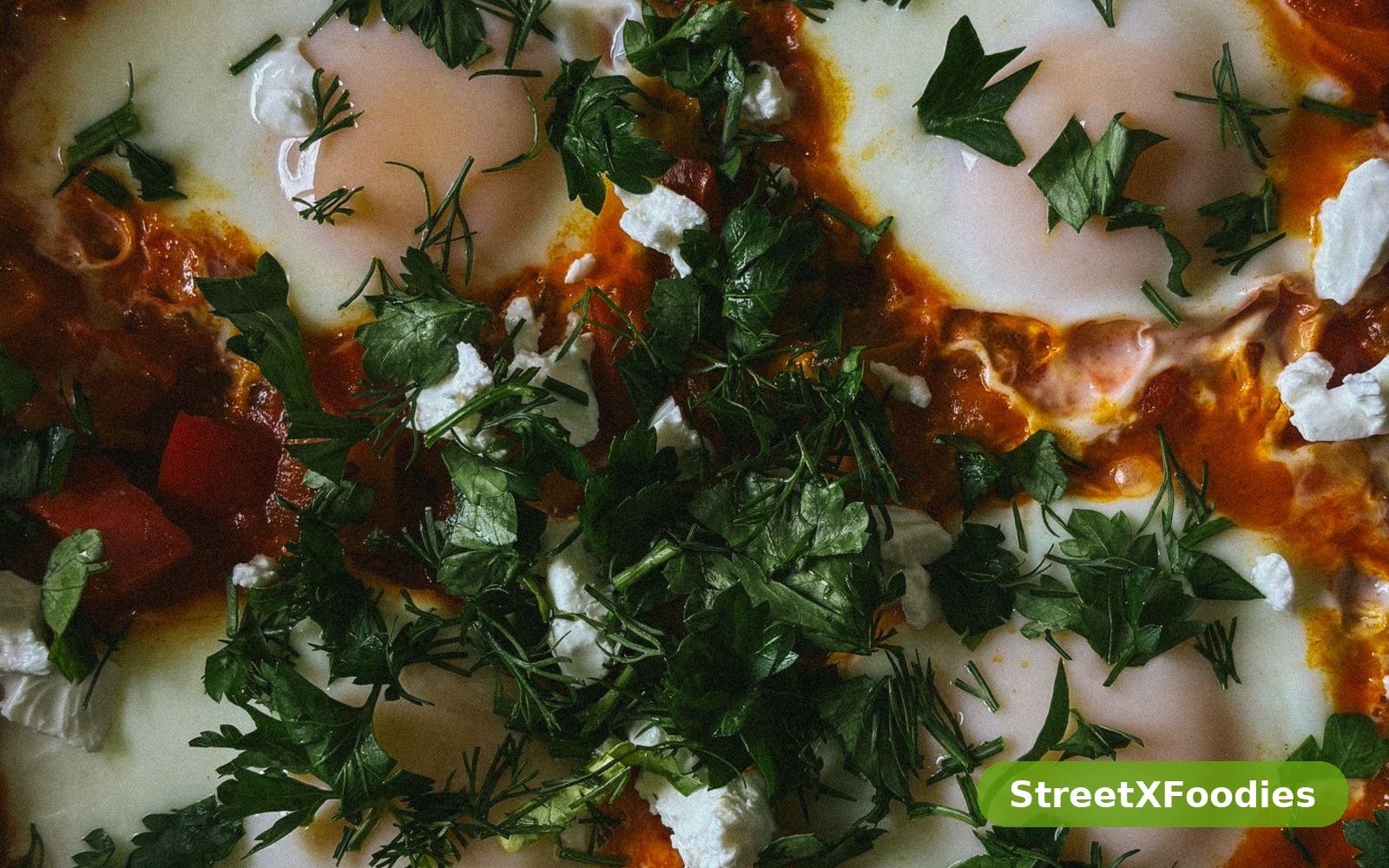
There are some dishes that feel like they were invented for slow weekend mornings, and shakshuka is one of them. The first time I made it, I was honestly a little sceptical. Eggs poached in tomato sauce? It sounded like something that would either be brilliant or a complete mess, with not much in between. But the pan came off the heat about half an hour later, the eggs were sitting there in this deep red sauce with the yolks still soft, and I tore off a piece of bread and scooped some up before it had even reached the table. That was the moment I got it.
Shakshuka is one of those recipes that looks far more impressive than it actually is. Everything happens in one pan. There’s no complicated technique, no special equipment, and the whole thing is ready in about thirty minutes from the moment you start chopping an onion. It’s the kind of food that works just as well for a lazy Saturday brunch as it does for a quick weeknight dinner when you don’t want to wash three pans and a baking tray. And once you add feta, it goes from very good to the kind of dish people ask you to make again the following weekend.
The version I’m sharing here is the one I keep coming back to. It’s not a fussy, by-the-book version. It’s the one that works in a real kitchen on a real evening, with ingredients you can actually find, and with enough room to adjust the heat and the seasoning to your own taste. If you’ve never made shakshuka before, this is a good place to start. If you have, the feta and the little details below might be the reason you never go back to the plain version.
What Is Shakshuka, Anyway?
Shakshuka is a dish of eggs poached in a simmering sauce of tomatoes, peppers, onions, and warm spices. It comes from North Africa, most often traced back to Tunisia, and over the years it has travelled across the Middle East and the Mediterranean, picking up small variations in every place it landed. In Israel it’s a breakfast staple. In Libya and Tunisia, it’s often a little spicier. In some versions, you’ll find potatoes or chickpeas in the sauce. In others, the eggs go in whole and the pan goes into the oven to finish.
The name itself is one of those words people pronounce five different ways, and none of them are really wrong. Shak-shoo-ka is the usual one. The literal meaning is sometimes given as “a mixture,” which feels right, because that is exactly what this is: a mixture of simple things that somehow tastes like much more than the sum of its parts.
What I love about shakshuka is that it’s honest food. It was never a restaurant invention. It was the kind of thing people cooked at home with whatever was in the kitchen — a few tomatoes, some peppers, an onion, eggs from the market. It was cheap, filling, and quick, and it fed a family with one pan and some bread. That history is still in the dish. It doesn’t pretend to be anything it isn’t. It just happens to taste fantastic.
If you want the fuller background, there’s a good overview of shakshuka’s origins and how it spread across North Africa and the Middle East on Wikipedia, and a well-tested version with step-by-step photos at The Mediterranean Dish. What struck me reading it was how many countries have a version of this dish and how fiercely people defend their own. That’s usually a good sign. When everyone claims a dish, it’s because the dish is worth claiming.
Why Feta Changes Everything
The classic shakshuka doesn’t always include cheese. Plenty of people make it without, and it’s still good. But feta is the addition that made this recipe a regular in my kitchen, and here’s why.
Feta does two things at once. First, it brings salt. The tomato sauce is rich and sweet, especially if your tomatoes are good, and the feta cuts through that sweetness with a sharp, briny edge. It stops the dish from tasting one-note. Second, it brings texture. Where the sauce is soft and the eggs are silky, the feta stays in little crumbles that soften at the edges but never fully melt. You get these small, salty pockets as you eat, and they make every spoonful slightly different.
The trick is when you add it. Some of the feta goes in just before the eggs, so it warms through and softens into the sauce. The rest goes on at the very end, right before serving, so it stays cool and crumbly on top. That contrast — warm, melty feta underneath and cool, firm feta on top — is what makes the dish feel finished rather than just assembled.
Use a proper block of feta if you can, the kind that comes in brine, and crumble it yourself. The pre-crumbled stuff in bags is convenient, but it’s usually drier and more powdery, and it doesn’t soften the same way. A block will cost about the same and taste noticeably better. If you can’t find feta, a mild goat cheese works as a substitute, though it melts more and gives you a creamier, less salty result. Halloumi is another option if you like things firmer, but honestly, feta is the one that belongs here.
Ingredients
For four servings, you’ll need the following. I’ve kept the list short on purpose. Shakshuka is not a dish that rewards a long shopping list.
- 2 tablespoons olive oil
- 1 large onion, finely diced
- 1 red bell pepper, diced
- 1 yellow bell pepper, diced (or a second red one)
- 4 cloves garlic, finely minced
- 1 teaspoon ground cumin
- 1 teaspoon sweet paprika
- 1/2 teaspoon ground coriander
- 1/4 teaspoon cayenne pepper, or a pinch of chilli flakes (adjust to your taste)
- 1 can (800g / 28 oz) crushed tomatoes
- 1 tablespoon tomato paste
- 1 teaspoon sugar (optional, but helpful if your tomatoes are sharp)
- Salt and black pepper, to taste
- 6 large eggs
- 150g (about 5 oz) feta cheese, crumbled
- A small handful of fresh parsley or cilantro, chopped
- Crusty bread, pita, or flatbread, for serving
A note on the tomatoes: this is the one ingredient worth being picky about. The sauce is mostly tomatoes, so if they taste flat, the whole dish tastes flat. Canned crushed tomatoes are absolutely fine, and honestly better than out-of-season fresh ones. Look for a brand you trust, and if you can find San Marzano-style tomatoes, they make a real difference — sweeter, less acidic, and they break down into a smoother sauce. If you’re using fresh tomatoes instead, you’ll need about six large ripe ones, peeled and chopped, and you’ll want to cook the sauce a few minutes longer.
How to Make One-Pan Shakshuka with Feta
This whole dish takes about thirty minutes, and most of that is just the sauce simmering. There’s nothing to rush, and there’s nothing to be nervous about. Here’s how it goes.
Start with the onion and peppers. Heat the olive oil in a large, deep skillet over medium heat — a 30cm (12-inch) pan with a lid is ideal. Add the onion and peppers with a good pinch of salt and cook them for about eight minutes, stirring now and then, until the onion is soft and translucent and the peppers have lost their raw crunch. Don’t rush this part. The onion is the foundation of the sauce, and if it’s undercooked, you’ll taste it later. It should be soft and sweet, not browned.
Add the garlic and spices. Stir in the garlic, cumin, paprika, coriander, and cayenne, and cook for about a minute, until the whole pan smells warm and fragrant. This is the moment when the kitchen starts to smell like something good is happening. The spices need that brief minute in the hot oil to wake up — if you add them with the tomatoes, they stay a little raw and dusty. Keep the heat at medium and don’t walk away here; garlic goes from perfect to burnt in about thirty seconds.
Build the sauce. Add the tomato paste and stir it through for another minute, then pour in the crushed tomatoes. Add the sugar if you’re using it, season with salt and pepper, and give everything a good stir. Let the sauce come up to a gentle simmer, then turn the heat down to medium-low and let it cook for ten to twelve minutes, stirring occasionally, until it has thickened enough that it holds a line when you drag a spoon through it. This is important. If the sauce is too thin when the eggs go in, they’ll sink and the whites will spread everywhere. You want it thick enough to hold the eggs up.
Add the first half of the feta. Stir about half the crumbled feta into the sauce and let it warm through for a minute. It will soften into the sauce and give it a slightly creamy, salty edge. Taste the sauce now and adjust the seasoning. This is your last easy chance to fix the salt, the heat, or the sweetness, so take a proper taste, not a polite one.
Make wells and crack in the eggs. Use the back of a spoon to make six small wells in the sauce, spaced out around the pan, then crack an egg into each one. Try to keep the eggs in their wells — if the sauce is thick enough, they will stay put. Sprinkle a little salt and pepper over the eggs.
Cover and cook gently. Put the lid on and cook on low heat for seven to ten minutes. The whites need to be fully set, and the yolks should still be soft and runny when you press them gently. Start checking at seven minutes. There’s a fine line between a perfect runny yolk and an overcooked one, and it’s only about two minutes wide. If you like your yolks firmer, give it twelve minutes and check again.
Finish with feta and herbs. Take the pan off the heat, scatter the rest of the feta over the top, and finish with the chopped parsley or cilantro. Let it sit for a minute, then bring the whole pan to the table. Shakshuka is meant to be eaten straight from the pan, with bread for scooping. Don’t bother plating it — you’ll lose half the charm.
The Eggs: Getting Them Right
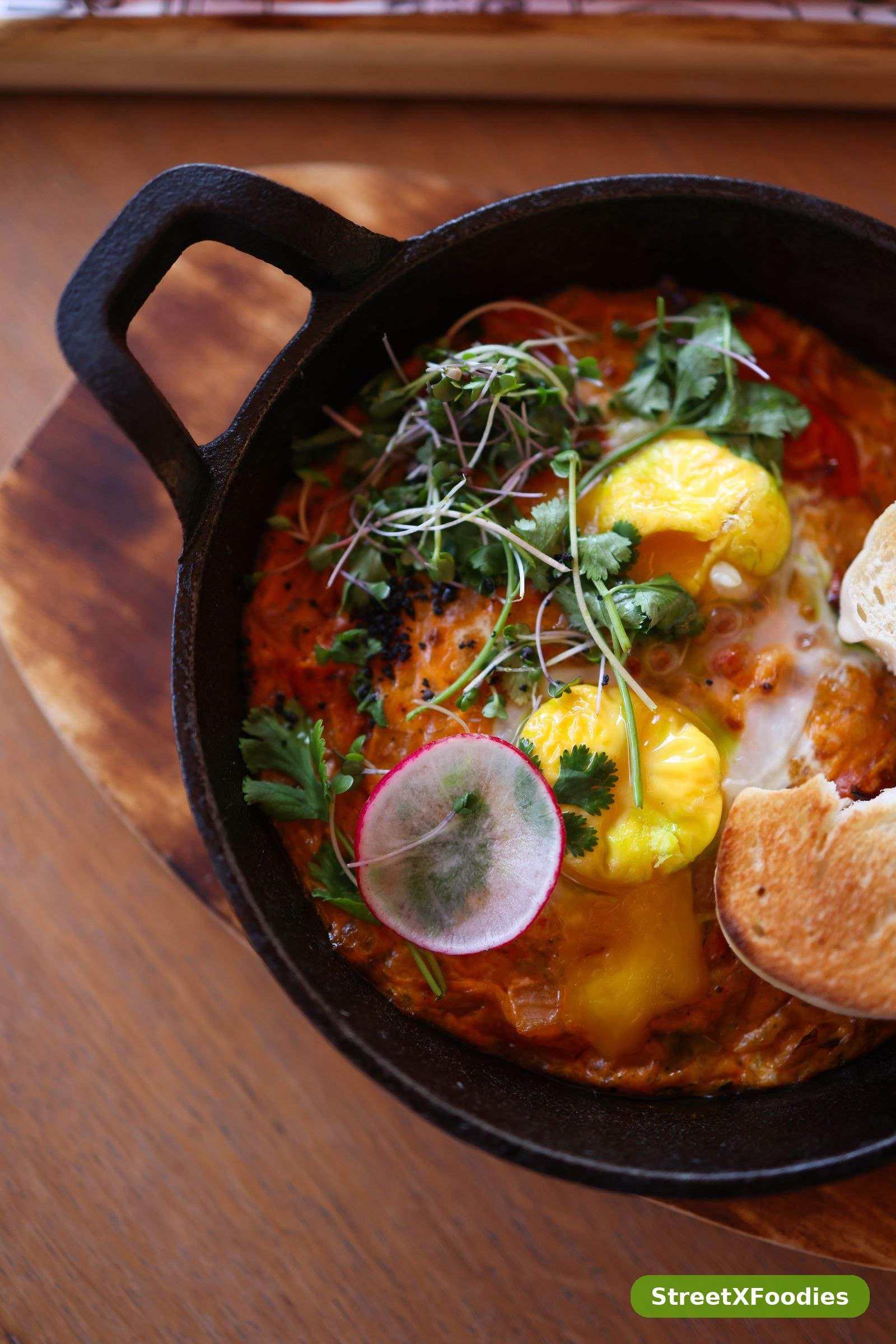
If there’s one thing people worry about with shakshuka, it’s the eggs. Will they cook through? Will the yolks break? What if the whites stay runny? These are fair questions, and they’re all easy to handle once you know what to look for.
The most important thing is the sauce thickness I mentioned above. Thick sauce holds the eggs in place and lets the heat reach the whites evenly. Thin sauce lets the eggs slide around, and the whites spread out into thin, ragged sheets that cook unevenly. So if your sauce still looks watery, give it another five minutes before the eggs go in. It’s worth the wait.
The second thing is the lid. You need it. The lid traps steam, and that steam cooks the tops of the eggs while the sauce cooks them from below. Without a lid, the whites on top stay unset while the bottoms overcook. If you don’t have a lid that fits, a large plate or a baking tray over the pan will do the job.
And the third thing is the timer. Seven minutes is the sweet spot for most pans on low heat. If you’re cooking on a slightly higher heat or your pan is thin, check at six. If your pan is heavy cast iron and holds heat, you might need eight or nine. The goal is whites that are opaque all the way through and yolks that still jiggle when you nudge the pan. If you crack one open and the yolk runs into the sauce, you’ve done it right — that’s exactly what you want, because that runny yolk becomes part of the sauce.
One more practical tip: crack each egg into a small bowl first, then slide it into the well. That way, if you get a bad egg or a piece of shell, it doesn’t go into the pan, and you have much more control over where the egg lands. It’s a small extra step and it saves real trouble.
What to Serve with Shakshuka
Bread is not optional here. It’s half the dish. The whole point of shakshuka is that you scoop the sauce and the yolk up with something, and a spoon just doesn’t do it the same way. A crusty loaf — sourdough is my favourite — torn into rough pieces is perfect. Warm pita works beautifully too, and flatbread is the most practical if you’re eating at the table with the pan in the middle and everyone reaching in.
Beyond bread, shakshuka is flexible. For brunch, I like it with a simple green salad and some olives on the side. For dinner, it goes well with roasted potatoes or a grain like couscous, which soaks up the extra sauce. If you’re feeding people who want something more substantial, a plate of grilled halloumi or some spicy sausage on the side turns it into a proper feast.
And coffee, obviously, if it’s morning. Something about the warmth of the sauce and the sharpness of the feta just works with a strong cup of coffee. If it’s evening, a glass of something cold and simple — sparkling water with lemon, or a light beer — does the job.
Variations Worth Trying
Once you’ve made the basic version a few times, shakshuka is a great dish to play with. The sauce is forgiving, and it takes well to additions. Here are a few that I’ve tried and liked.
Add chickpeas. A can of drained chickpeas stirred into the sauce makes it heartier and adds a lovely texture. It turns a light brunch into something that genuinely fills you up for dinner. Add them when the tomatoes go in so they have time to warm through.
Make it spicier. If you like heat, a spoonful of harissa paste stirred in with the tomato paste will change the whole character of the dish. It adds depth, not just fire. Go slowly — a teaspoon at a time — and taste as you go.
Add spinach. A couple of handfuls of baby spinach wilted into the sauce just before the eggs go in adds colour and makes the whole thing feel a bit healthier. It also works well with the feta, which is no coincidence — spinach and feta are an old friendship.
Try it with potatoes. Diced, par-boiled potatoes added with the peppers give you a version that’s closer to a full meal in a pan. It takes a bit longer, because the potatoes need to soften, but it’s worth it on a cold evening. This is the version I make when I want dinner and I don’t want to think about a side dish.
If you’re a fan of one-pan cooking in general, the same approach works across the site. Our One-Pan Pav Bhaji with Buttered Rolls uses the same idea — one pan, big flavours, bread for scooping — and the One-Pan Shrimp and Sausage Jambalaya is another great weeknight option when you want something with a bit more heat.
Storage and Leftovers
Shakshuka is best eaten fresh, straight from the pan. That said, the sauce on its own keeps very well, and that’s the practical way to think about leftovers. If you have sauce left over without eggs, let it cool and store it in a sealed container in the fridge for up to four days. When you want to eat it again, reheat it in a pan, crack in fresh eggs, and you’re back to the full dish in ten minutes.
If the eggs are already in the pan, you can still store the leftovers, but be honest with yourself about what you’re getting. Reheated poached eggs are never as good as fresh ones, and the yolks will be fully set by then. It’s still perfectly edible — just microwave it gently or warm it in a covered pan on low heat — but the magic of the runny yolk is gone. For that reason, if you’re cooking for two and the recipe serves four, consider making a half batch, or just making the full sauce and only adding as many eggs as you need.
The sauce also freezes well. Let it cool completely, freeze it in a container for up to three months, and defrost it overnight in the fridge before reheating. The eggs, obviously, don’t freeze. Add them fresh.
Frequently Asked Questions
Can I make shakshuka without feta?
Yes, absolutely. The classic version often has no cheese at all, and it’s still delicious. The feta is an addition, not a requirement. If you leave it out, you might want to add a little extra salt to the sauce to compensate, and a spoonful of cream or a knob of butter stirred in at the end will give you some of the richness the feta would have brought. But the dish stands perfectly well on its own.
What kind of pan should I use for shakshuka?
A large, deep skillet with a lid is the best option. Cast iron is ideal because it holds heat evenly and goes from the stove to the table looking great, but a heavy stainless steel or non-stick pan works fine too. The key thing is that it has a lid, or that you have a plate or tray that can cover it, because the steam is what cooks the tops of the eggs. Avoid a pan that’s too shallow — the sauce needs room, and the eggs need to sit in it rather than on top of it.
How do I know when the eggs are done?
The whites should be completely opaque, with no clear or jelly-like patches, and the yolks should still jiggle slightly when you gently shake the pan. That usually takes seven to ten minutes on low heat with the lid on. Start checking at seven minutes by lifting the lid and looking at the whites near the centre of the pan, which cook last. If you’re unsure, it’s better to check a minute early than a minute late — you can always put the lid back on, but you can’t uncook an egg.
Can I make the sauce ahead of time?
Yes, and it’s a great way to make shakshuka even faster on a busy morning. Make the sauce up to the point where the eggs would go in, let it cool, and store it in the fridge for up to four days. When you’re ready to eat, reheat the sauce in the pan until it’s simmering, then crack in the eggs and cook them as usual. The whole thing takes about ten minutes from a cold fridge. If you want more one-pan ideas for busy evenings, our One-Pan Creamy Spinach and Artichoke Pasta and One-Pan Arroz con Pollo with Peas and Peppers are both built on the same idea: one pan, minimal washing up, dinner on the table fast.
Is shakshuka healthy?
For a dish this satisfying, it’s surprisingly light. Eggs are a great source of protein, the sauce is mostly vegetables, and olive oil is one of the better fats you can cook with. The main things to watch are the bread — which is easy to overdo, because it’s so good for scooping — and the feta, which adds salt. Neither is a problem in normal amounts. If you want a lighter version, use less oil, go easy on the feta, and serve it with a salad instead of a whole loaf of bread. But honestly, for a breakfast that keeps you full until lunch, shakshuka is hard to beat.
What if I don’t like cilantro or parsley?
Leave it out. The herbs are a garnish, not a structural part of the dish, and shakshuka tastes perfectly good without them. If you want a fresh finish without the flavour you don’t like, try chopped chives or a few torn basil leaves instead. Or just skip the green entirely and finish with an extra drizzle of good olive oil and a crack of black pepper. The dish won’t miss the herbs, and you’ll enjoy it more.
Shakshuka is one of those recipes that earns its place in a regular rotation not because it’s fancy, but because it’s reliable. One pan, thirty minutes, ingredients you probably already have, and a result that tastes like you tried much harder than you did. Make it once with feta, eat it straight from the pan with good bread, and I think you’ll understand why it’s been cooked the same way for generations. Some recipes don’t need improving. They just need making.
1 thought on “One-Pan Shakshuka with Feta”