
Garlic Naan Bread
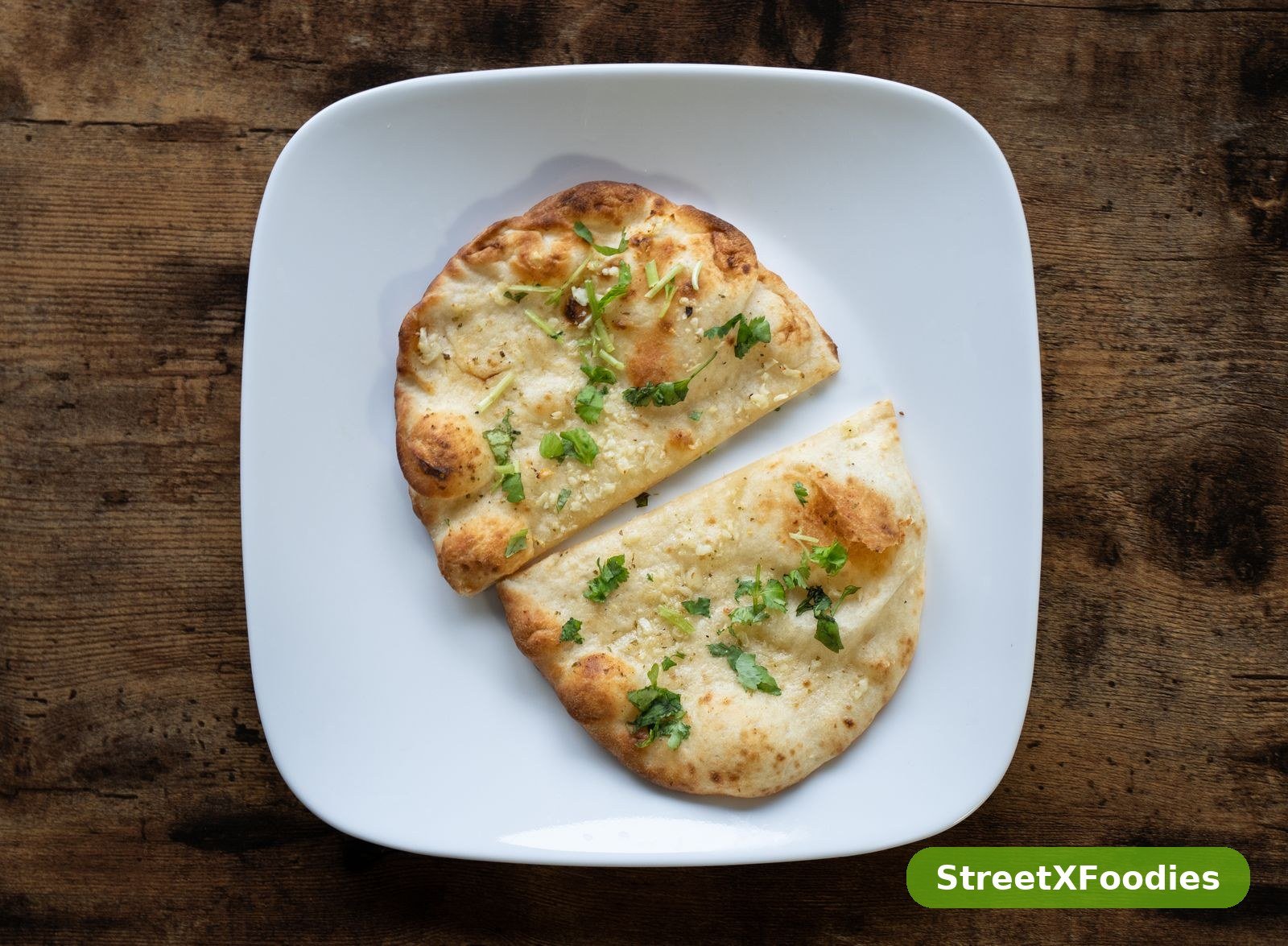
There is a particular smell that tells you dinner is about to be good, and it is the smell of garlic hitting hot butter on fresh bread. It fills the kitchen in about ten seconds flat, and it is the reason garlic naan disappears from the table faster than anything else on it. You can put out a whole spread — curry, rice, salad, pickles — and people will still reach for the naan first, tear off a piece, and use it to scoop up whatever is nearest. That is exactly what it is for.
For a long time I assumed naan belonged to restaurants, that it needed a clay tandoor oven and years of practice, and that the stuff I made at home would always be a sad, flat cousin of the real thing. Then I tried it in a cast iron skillet, and it turned out the tandoor was never the point. The point is heat — a lot of it, all at once — and a dough that is soft enough to puff and blister. Once I got those two things right, the naan coming out of my own kitchen was better than most takeaway. Cheaper, too, and it is still warm when it reaches the table, which is half the pleasure.
This is the recipe I make most weekends now, usually alongside a curry that needs something to mop it up. It takes about an hour from start to finish, most of which is just waiting for the dough to rise, and it works with plain flour from any supermarket. No special equipment, no yeast anxiety, and no tandoor required.
What Makes Garlic Naan Different from Plain Naan
Plain naan is lovely on its own — soft, slightly chewy, with those dark blistered spots where the dough met the heat. Garlic naan takes that same bread and adds a layer of flavour that changes how it eats. Minced garlic is pressed into the dough before cooking, and then, while the bread is still hot from the pan, it gets brushed with melted butter that has garlic and coriander folded through it. The butter soaks into the blistered top, the garlic turns sweet and mellow in the residual heat, and the coriander adds a fresh, green note that keeps the whole thing from feeling heavy.
It is worth knowing that naan itself has a long history across Central and South Asia, where it has been baked in tandoor ovens for centuries. The history of naan runs from Persia through the Mughal courts of India, and the garlic-butter version most of us know from restaurants is a relatively modern restaurant favourite rather than an ancient classic. That is fine by me. Some of the best dishes are the ones that got improved along the way.
The other thing that makes garlic naan different is how it is eaten. Plain naan is a side. Garlic naan is a side that people treat like the main event — torn into strips and used to scoop curry, wrapped around pieces of chicken tikka, or just eaten on its own while standing at the counter, which is what usually happens in my kitchen before the bread even makes it to the table.
The Dough: Yeast, Yoghurt, and Why Both Matter
Good naan dough is soft, a little sticky, and slightly enriched. The three things that give it its character are yeast, yoghurt, and a small amount of fat. The yeast does the obvious job — it makes the dough rise and gives the bread its airy pockets. The yoghurt does the quieter, more important job: its acidity tenderises the gluten, which is what keeps the naan soft instead of chewy like a pizza base, and it adds a faint tang that makes the bread taste like more than just flour and water.
You do not need a stand mixer for this. A bowl, a spoon, and your hands are enough, and honestly the dough is so soft that kneading it by hand takes about five minutes. If you have a mixer with a dough hook, use it on low for three or four minutes, but do not overwork it. Naan dough should be handled gently. Over-kneading develops too much gluten and you end up with bread that fights back when you try to stretch it.
There are no-yeast versions of naan out there, usually made with baking powder and yoghurt, and they are not bad — they are fast, and they will save a weeknight dinner. But they do not puff the same way, and they go stale faster. If you have an hour, use yeast. The difference is real, and it is the difference between bread that is nice and bread that makes people ask for the recipe.
One more thing about the flour: plain all-purpose flour is exactly right. Bread flour makes the naan too chewy. Whole wheat flour on its own makes it dense, though swapping in a quarter whole wheat for a nuttier flavour works nicely once you have the basic version down. For a first attempt, keep it simple and use all white flour. If you want a second opinion on the dough itself, King Arthur Baking’s naan recipe uses a very similar enriched dough and is a good cross-check on hydration and timing.
Ingredients
This makes 8 naan, which is enough for 4 people as a side — or 2 people if they are anything like my family. The recipe doubles easily; just use a bigger bowl.
For the dough
- 3 cups (375 g) plain all-purpose flour, plus extra for dusting
- 2 teaspoons instant yeast (or 2 1/4 teaspoons active dry yeast)
- 1 teaspoon sugar
- 1 teaspoon fine salt
- 3/4 cup (180 ml) warm water (not hot — about the temperature of a comfortable bath)
- 1/2 cup (120 g) plain yoghurt, full fat if you have it
- 2 tablespoons vegetable oil or melted ghee, plus a little more for the bowl
For the garlic butter
- 4 tablespoons (55 g) unsalted butter
- 4 cloves garlic, minced very finely
- 2 tablespoons fresh coriander (cilantro), chopped
- A pinch of flaky salt
To top the naan
- 2 cloves garlic, minced, for pressing into the dough
- 1 tablespoon chopped coriander, for scattering
- A little nigella seed (optional, but lovely)

Step by Step: Making the Dough
1. Wake up the yeast
If you are using instant yeast, you can skip this step and mix everything together. But I still like to bloom it, because it tells me in two minutes whether the yeast is alive, which saves you from discovering an hour later that your dough never rose. Stir the yeast and sugar into the warm water and leave it for 5 to 10 minutes. It should go foamy on top. If nothing happens, the water was too hot or the yeast is dead — start again with fresh yeast and cooler water. Water hotter than about 45°C (110°F) kills yeast, and it is the most common reason naan dough fails.
2. Mix and knead
Put the flour and salt in a large bowl and make a well in the middle. Pour in the yeast mixture, the yoghurt, and the oil. Stir with a wooden spoon until it comes together into a shaggy, sticky mass, then turn it out onto a lightly floured surface. Knead for 4 to 5 minutes, folding and pressing, until the dough is smooth and soft. It should still feel slightly tacky — if it is sticking to your hands in long strands, add flour a tablespoon at a time, but resist the urge to add a lot. A soft, slightly sticky dough makes soft naan. A stiff dough makes stiff naan.
3. Let it rise
Lightly oil the bowl, put the dough back in, turn it once to coat, and cover with a damp tea towel or cling film. Leave it somewhere warm for 45 minutes to an hour, until it has roughly doubled in size. A turned-off oven with the light on is ideal. In a cold kitchen it may take a little longer; that is fine, just give it time. The dough is ready when you can poke it with a finger and the dent stays instead of springing straight back.
4. Divide and rest
Turn the dough out and divide it into 8 equal pieces — a knife or a bench scraper makes this easy. Roll each piece into a ball, tucking the edges underneath, then cover them with the tea towel and let them rest for 10 minutes. This short rest relaxes the gluten, which means the naan will stretch without snapping back. Skip it and you will be fighting the dough with your rolling pin.
Shaping the Naan
Take one ball of dough and roll it out on a lightly floured surface into a teardrop or oval shape, about 20 cm (8 inches) long and 4 to 5 mm thick. Do not aim for a perfect circle — real naan is never a perfect circle, and the teardrop shape is actually the traditional one. The thickness matters more than the shape: too thin and it dries out and turns crisp like a cracker; too thick and the middle stays doughy while the outside burns.
Scatter a little of the minced garlic and coriander over the top and press it gently into the surface with your fingers or the flat of your hand. A very light roll with the rolling pin will set it in place. If you like, sprinkle a few nigella seeds on top as well. Brush the surface very lightly with water — this helps the dough stick to the pan, which is how you get those dramatic blisters.
Roll out one naan at a time and cook it straight away, rather than rolling all eight first. The dough relaxes and spreads while it waits, and you will end up with ovals that are too big for your pan. Roll, cook, roll, cook — it becomes a rhythm after the second one.
Cooking Without a Tandoor: The Hot Skillet Method
This is the part that surprises people. A heavy cast iron skillet, or any heavy-bottomed frying pan, heated until it is properly hot, does an excellent job of mimicking a tandoor. The trick is patience: put the pan over medium-high heat and let it sit there for a full 3 to 4 minutes before the first naan goes in. Flick a drop of water onto the surface — if it sizzles and evaporates instantly, the pan is ready. If it just sits there, wait longer. A pan that is not hot enough is the single biggest cause of pale, flat naan.
Place the naan garlic-side up in the dry pan — no oil. It will start to bubble almost immediately. After 60 to 90 seconds, you should see bubbles rising across the surface and dark spots forming underneath. Flip it with tongs or a spatula and cook the other side for another 45 to 60 seconds, pressing down gently on any parts that puff up too much. You want deep golden-brown patches and a few charred blisters, not an even tan. Those dark spots are flavour.
Some people like to finish the naan directly over a gas flame for a few seconds to get extra char, holding it with tongs. It works and it looks spectacular, but it is optional, and I would not try it with an electric hob. The skillet alone gives you everything you need.
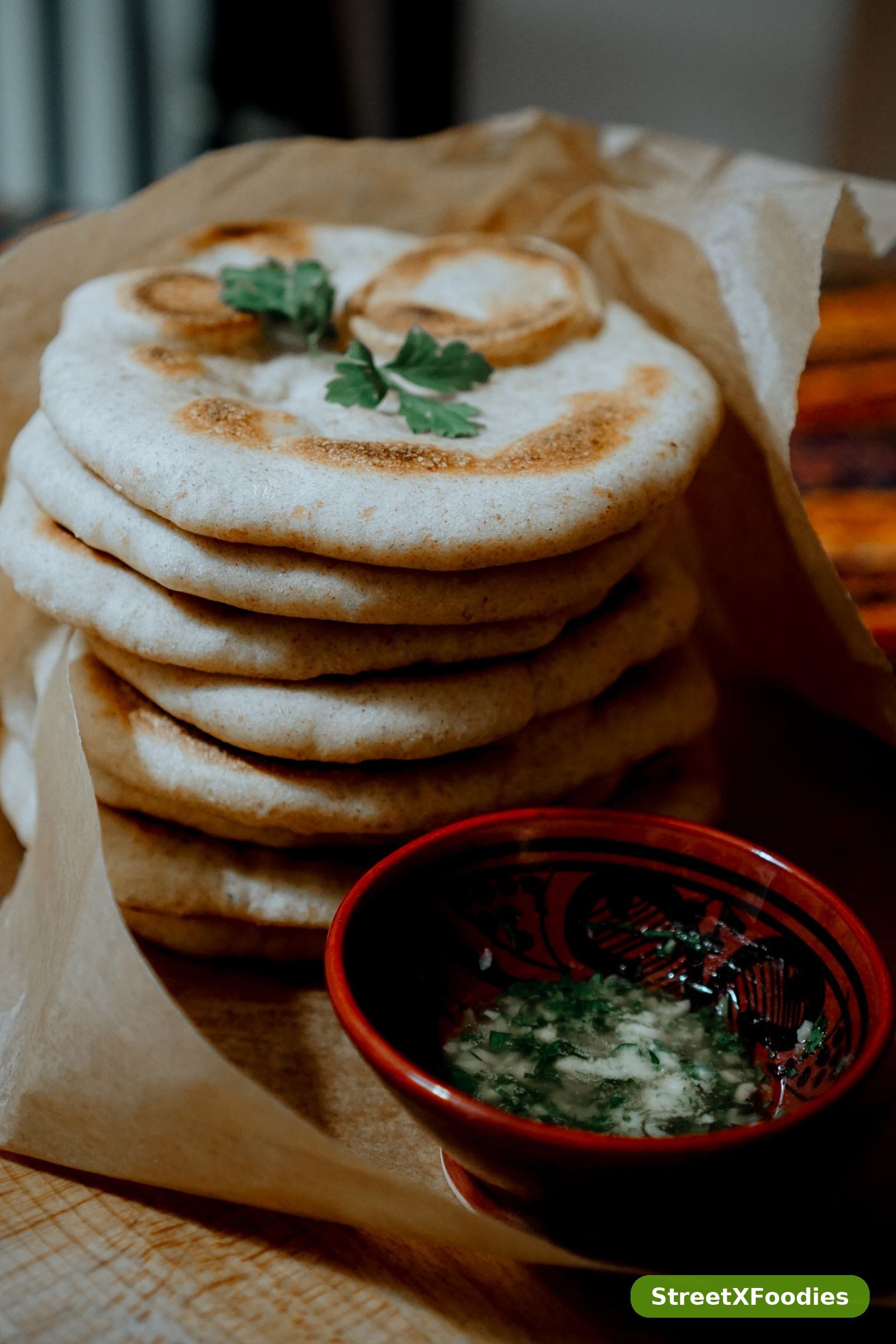
As each naan comes out of the pan, brush it generously with the garlic butter while it is still hot. The butter melts straight into the bread. Stack the finished naan in a clean tea towel or a basket lined with a towel, and fold the towel over the top to keep them warm and soft while you cook the rest. They will stay warm for a good 20 minutes this way, which is usually long enough for the whole batch to be eaten.
The Garlic Butter (Do Not Skip This)
The garlic butter is not a garnish. It is half the recipe. Melt the butter in a small pan over low heat, add the minced garlic, and cook it for just 30 seconds to a minute — long enough to take the raw edge off, not long enough to brown. Burnt garlic is bitter and it will ruin the whole batch, so keep the heat low and take the pan off the moment the garlic smells fragrant. Stir in the chopped coriander and the pinch of flaky salt, and use it while it is warm.
A small variation I like: add a squeeze of lemon juice to the butter, or a pinch of chilli flakes if you want a little heat. Both work. What does not work is using garlic powder instead of fresh garlic — the flavour is flat and dusty by comparison. Four fresh cloves, minced fine, is the right amount for this quantity of butter.
Common Mistakes (and How to Fix Them)
Most garlic naan failures come down to one of a few things, and all of them are easy to fix once you know what to look for.
The dough did not rise. Almost always the water was too hot, or the yeast was old. Test the yeast by blooming it first, and keep the water warm, not hot — if you cannot comfortably hold your finger in it, it is too hot for yeast.
The naan is tough and chewy. Either too much flour was added during kneading, or the dough was over-kneaded. Keep the dough soft and slightly tacky, and stop kneading once it is smooth.
The naan is pale and flat. The pan was not hot enough. Let it heat for a full few minutes before the first naan, and do not be afraid of a little smoke. High heat is what makes the bread puff and blister.
The garlic burns. The minced garlic on top of the naan can scorch if the pan is too hot or the garlic pieces are too big. Mince it very finely, and if your pan runs extremely hot, cook the naan garlic-side down for the shorter side only, or put the garlic on after the first flip.
The naan goes hard as it cools. This usually means it was cooked too long, or it was left uncovered. Brush with butter as soon as it leaves the pan and keep the stack wrapped in a towel. Naan is at its best in the first half hour — after that, it is still good, but it is not the same bread.
What to Serve with Garlic Naan
Garlic naan is the most versatile bread in an Indian meal. It scoops up anything with a sauce, so start with the sauciest thing you have. A rich chicken tikka is the classic pairing, and for good reason — the smoky, spiced chicken against the buttery, garlicky bread is one of those combinations that needs no explaining. It is also excellent with chicken shawarma, torn open and used as a wrap, or alongside a bowl of dal, where the bread does the work of a spoon.
It is not only for Indian food, either. I have served garlic naan with a creamy tzatziki as a starter, torn into strips for dipping, and it works beautifully — the cool yoghurt and cucumber against the warm garlic butter is a combination worth trying. It also goes with soups, with pav bhaji when you want a change from the usual rolls, and with a fried egg and some chilli oil for a breakfast that feels slightly indulgent and entirely justified.
If you have leftovers — and that is a big if — the naan makes excellent next-day flatbread. Split it, toast it, and use it as a base for a quick pizza, or cut it into triangles and crisp them in the oven for dipping. Nothing needs to go to waste.
Variations Worth Trying
Once you have the basic recipe down, it is a good base for experimenting. A cheese naan, stuffed with grated mozzarella and a little chopped green chilli before the dough is rolled out, is a crowd-pleaser — seal the edges well or the cheese will escape into the pan. A chilli naan, with finely chopped green chillies pressed into the dough alongside the garlic, is for people who like their bread with a kick.
For a butter naan, simply leave out the garlic and brush with plain melted butter and a pinch of salt. For a keema naan, spread a thin layer of spiced minced meat over the dough before folding it in half and rolling it out gently — it is more work, but it turns the bread into a meal on its own. And if you want a sweeter version, a Peshwari naan stuffed with ground almonds, coconut, and a little sugar is a dessert bread that goes wonderfully with a cup of chai.
The dough itself is forgiving about additions. A spoonful of nigella seeds kneaded in gives the bread a gentle onion flavour. A little chopped spinach wilted and squeezed dry, folded into the dough, makes a green-flecked naan that children seem to like more than plain spinach ever manages. The point is that once you trust the dough, the variations are easy.
Storing and Reheating
Fresh naan is best eaten the same day, but it keeps well if you store it properly. Let the naan cool completely, then wrap the stack tightly in cling film or put it in a sealed bag. It will keep at room temperature for a day, or in the fridge for up to three days. For longer storage, freeze it: stack the naan with a sheet of baking paper between each one, slide the stack into a freezer bag, and squeeze out the air. It keeps for up to two months.
To reheat, sprinkle the naan very lightly with water and warm it in a hot, dry skillet for 30 seconds a side, or wrap it in foil and put it in a 180°C (350°F) oven for 5 minutes. The microwave works in a pinch — 15 to 20 seconds, wrapped in a damp paper towel — but it softens the bread rather than reviving the blistered top. Whatever method you use, brush it with a little more garlic butter after reheating. It brings the whole thing back to life.
Frequently Asked Questions
Can I make garlic naan without yeast?
Yes. Replace the yeast with 1 1/2 teaspoons of baking powder and add it to the flour along with the salt. The dough will not need a rise — just rest it for 20 minutes before shaping. The naan will be flatter and a little denser, and it will go stale faster, but it is a perfectly good weeknight shortcut. If you are used to a good naan recipe, the yeasted version is worth the extra hour.
Can I make the dough ahead of time?
Absolutely, and it actually improves with a slow rise. After kneading, put the dough in an oiled bowl, cover it tightly, and leave it in the fridge for up to 24 hours. The cold slows the yeast down and develops more flavour. Take it out an hour before you want to cook, let it come to room temperature, and then divide and shape as usual. If the dough has risen a lot in the fridge, just punch it down gently before shaping.
Why is my naan not puffing up?
Usually the pan is not hot enough, or the dough is rolled too thin. The puff comes from steam building up inside the dough faster than it can escape, and that needs fierce heat. Make sure the pan is properly preheated, keep the naan about 4 to 5 mm thick, and do not prick the bubbles with a fork. If the dough has been rolled out and left sitting for a while, it can also lose its puff — roll and cook one at a time.
Can I use whole wheat flour?
You can, but use a blend rather than all whole wheat — half white and half whole wheat works well and keeps the bread soft. All whole wheat makes a denser, heavier naan that does not puff as dramatically. Add an extra tablespoon or two of water if you are using whole wheat, because it absorbs more liquid than white flour.
What is the best pan for naan?
A cast iron skillet is the best choice because it holds heat evenly and gets very hot, which is what creates the blisters. A heavy stainless steel pan works too. A thin non-stick pan is the weakest option — it does not hold enough heat, and the naan tends to come out pale. Whatever pan you use, let it preheat properly and cook the naan dry, without oil.
How do I keep naan soft after cooking?
Brush it with butter the moment it leaves the pan, and stack it under a clean tea towel. The butter and the trapped steam keep the bread soft. Do not leave naan sitting out uncovered — it dries out in minutes. If you are cooking a big batch, a basket lined with a towel and a lid on top is the traditional way to keep it warm at the table.
That is the whole recipe, and it is one of those dishes that gets easier every time you make it. The first batch might be a little uneven — some pieces puffing dramatically, others staying flat — and that is completely normal. By the third batch you will have a rhythm, and by the fifth you will be making it without looking at the recipe. Make a double batch, keep the butter warm, and do not be surprised when the naan is gone before the curry is.