
Homemade Tzatziki with Cucumber and Dill

There is a small bowl that shows up on my table more often than almost anything else I make, and it is not a main dish at all. It is tzatziki. Cool, creamy, garlicky, with that fresh snap of cucumber and dill, it is the thing I reach for when grilled chicken needs a little help, when the pita bread is warm and waiting, and when a plate of vegetables needs something to make people actually eat them. It takes about fifteen minutes, it uses ingredients I almost always have in the fridge, and it makes everything around it taste better. That is a hard combination to beat.
I did not grow up eating tzatziki. The first time I had it, it was at a little Greek place tucked between two shops, the kind of restaurant where the tables are close together and the owner comes out to ask how everything is. The food was good, the grilled meat was good, but what I kept going back for, spoonful after spoonful, was the white sauce in the small bowl on the side. It was cool against the warm meat, it had this gentle garlic warmth without any bite, and there was a freshness to it that I could not quite place at first. When I asked what was in it, the waitress just smiled and said, “Yogurt, cucumber, garlic, dill. That is all.” I went home that night and made a version of it, and I have been making it ever since.
What I have learned over the years is that tzatziki is one of those recipes that looks almost too simple to mess up, and yet the difference between a watery, bland bowl and a thick, creamy, properly seasoned one is real. It comes down to a few small things: draining the cucumber properly, using the right yogurt, and giving it a little time to sit before you serve it. None of it is hard. It just asks for a bit of patience, and in return you get a dip that tastes like it came from a restaurant kitchen.
This is the version I make at home now. It is thick enough to scoop with a piece of warm pita without dripping everywhere, it has enough garlic to be interesting without overpowering the rest of the plate, and the dill is fresh and bright rather than dried and dusty. It keeps well in the fridge, it goes with almost everything, and once you have made it a few times, you will not need the recipe anymore. Your hands will just know it.
Why You’ll Love This Tzatziki
First, it is genuinely quick. Fifteen minutes, one bowl, no cooking at all. There is something deeply satisfying about a recipe that asks so little and gives so much back. You grate a cucumber, squeeze it dry, stir everything together, and you are done. It is the kind of thing you can make while the chicken is on the grill, and by the time the food is ready, the tzatziki has had its ten minutes in the fridge to settle into itself.
It is also endlessly useful. This is not a dip that only works with one dish. It goes on grilled chicken, it goes on lamb, it goes into wraps, it sits next to roasted vegetables, and it works as a spread on a sandwich the next day. I have put it on burgers, I have thinned it out with a little water and used it as a salad dressing, and I have eaten it straight out of the bowl with cucumber sticks when I was standing in the kitchen waiting for dinner to finish. It is one of those recipes that earns its place in the fridge because it never goes to waste.
Then there is the way it tastes, which is cool and fresh in a way that very few sauces manage. The yogurt brings a gentle tang, the cucumber brings crunch and water-cool freshness, the lemon lifts everything up, and the dill adds this soft, herby note that ties it all together. The garlic is there in the background, warm and savoury, but it never shouts. It is a sauce that refreshes the palate rather than tiring it, which is exactly what you want next to rich, grilled, or spicy food.
It is also a healthier choice than most dips without trying to be. There is no mayonnaise, no heavy cream, no frying. It is yogurt, cucumber, herbs, and olive oil, and that is about it. It fits easily into a light lunch, it works for people who are watching what they eat, and nobody at the table ever feels like they are eating diet food, because they are not. They are eating something genuinely delicious that just happens to be light.
What Is Tzatziki?
Tzatziki is a yogurt-based sauce from Greece, made with strained yogurt, cucumber, garlic, olive oil, and herbs, usually dill or mint. It is served as a dip, a sauce, and a side dish all at once, and it turns up everywhere in Greek cooking, from the meze table to the gyro stand. If you have ever eaten a gyro, you have almost certainly eaten tzatziki, because it is the cool white sauce that keeps the warm meat and the soft pita in balance.
The name comes from the Turkish word cacik, which describes a similar yogurt and cucumber dish, and versions of it exist all across the Eastern Mediterranean and the Middle East. Each place makes it slightly differently. Some add mint, some add dill, some leave the herbs out entirely. Some grate the cucumber fine, some chop it. But the idea is always the same: cool yogurt, fresh cucumber, garlic, and good olive oil. If you want to read more about its history and the different versions across the region, there is a clear overview on Wikipedia.
In Greece, tzatziki is rarely the star of the meal. It sits on the table in a small bowl, quietly doing its work next to grilled meats, fried vegetables, and warm bread. That is part of its charm. It does not demand attention. It just makes everything else better. And because it is served cold, it is a welcome contrast on a hot day or next to food that comes straight off the grill.
The version I am sharing here leans traditional. Strained Greek yogurt, grated and drained cucumber, fresh dill, garlic, lemon juice, and a good drizzle of extra virgin olive oil on top. No shortcuts, no sour cream pretending to be yogurt, no dried herbs when fresh ones are easy to find. It is the version I would be happy to put on the table for a Greek friend, and that is the standard I hold it to.
Ingredients You’ll Need
- 2 cups full-fat Greek yogurt, strained (about 500 grams)
- 1 large English cucumber, or 2 small Persian cucumbers
- 3 cloves garlic, finely minced or grated
- 2 tablespoons fresh dill, finely chopped, plus a little extra for garnish
- 1 tablespoon fresh lemon juice
- 1 tablespoon extra virgin olive oil, plus more for drizzling
- 1/2 teaspoon fine sea salt, plus a pinch for the cucumber
- 1/4 teaspoon freshly ground black pepper
- 1 teaspoon white wine vinegar (optional, for a little extra tang)
A word about the yogurt, because it matters more than anything else in this recipe. Use full-fat Greek yogurt, and if you can find strained yogurt, use that. The whole point of tzatziki is thickness. Regular yogurt is too thin, and no amount of draining the cucumber will save a dip that starts out runny. If your yogurt looks loose in the tub, you can strain it yourself: line a sieve with a coffee filter or a clean kitchen towel, spoon the yogurt in, set it over a bowl, and leave it in the fridge for an hour or two. What comes out will be thick, rich, and ready.
The cucumber matters too. An English cucumber is my first choice because it has thin skin, very few seeds, and a mild, sweet flavour. You do not even need to peel it, though I usually do, because I like the texture better without the skin. Persian cucumbers are a good second choice. What you want to avoid is a large, waxy, supermarket cucumber with big seeds and thick skin, because it brings too much water and not enough flavour. If that is all you have, peel it, cut it in half lengthwise, and scoop the seeds out with a spoon before you grate it.
Fresh dill is the other ingredient I would not swap out. Dried dill has its place, but it is not here. Fresh dill is soft, feathery, and bright, and it gives tzatziki its signature flavour. If you truly cannot find fresh dill, fresh mint is the traditional alternative, and it works beautifully. Dried dill will do in an emergency, but use half the amount and expect a quieter flavour.
How to Make Homemade Tzatziki
Start with the cucumber, because this is the step that decides whether your tzatziki is thick and creamy or thin and watery. Grate the cucumber on the coarse side of a box grater into a bowl. Sprinkle it with a good pinch of salt and leave it for ten minutes. The salt draws the water out, and you will be surprised how much liquid appears. Then gather the grated cucumber in a clean kitchen towel or a few layers of cheesecloth, twist it up, and squeeze hard over the sink. Keep squeezing until no more water comes out. You want the cucumber almost dry. This is the single most important step in the whole recipe, and it is worth doing properly.
While the cucumber is draining, make the base. Put the yogurt in a medium bowl and add the garlic, lemon juice, olive oil, salt, and pepper. Stir it until everything is combined and the yogurt looks smooth and glossy. Taste it now, before the cucumber goes in, because this is the moment to adjust the seasoning. It should be tangy, lightly salty, and garlicky enough to notice but not so much that it bites. If you like a sharper edge, add the teaspoon of white wine vinegar. If the lemon feels too strong, a tiny drizzle of honey, just a quarter of a teaspoon, rounds it out without making it sweet.
Now fold in the squeezed cucumber and the chopped dill. Stir gently until the cucumber and herbs are evenly distributed through the yogurt. You should be able to see flecks of green all through the white, and the dip should hold its shape on a spoon rather than sliding off. If it looks too loose, the cucumber was probably not squeezed enough, and you can stir in another spoonful of yogurt to firm it up.
Cover the bowl and put it in the fridge for at least thirty minutes, and an hour if you have it. This resting time matters. The garlic softens and mellows, the dill perfumes the yogurt, and the flavours settle into each other. Tzatziki straight from the bowl is good. Tzatziki after an hour in the fridge is noticeably better. If you are making it for guests, make it in the morning and let it sit all day. It only improves.
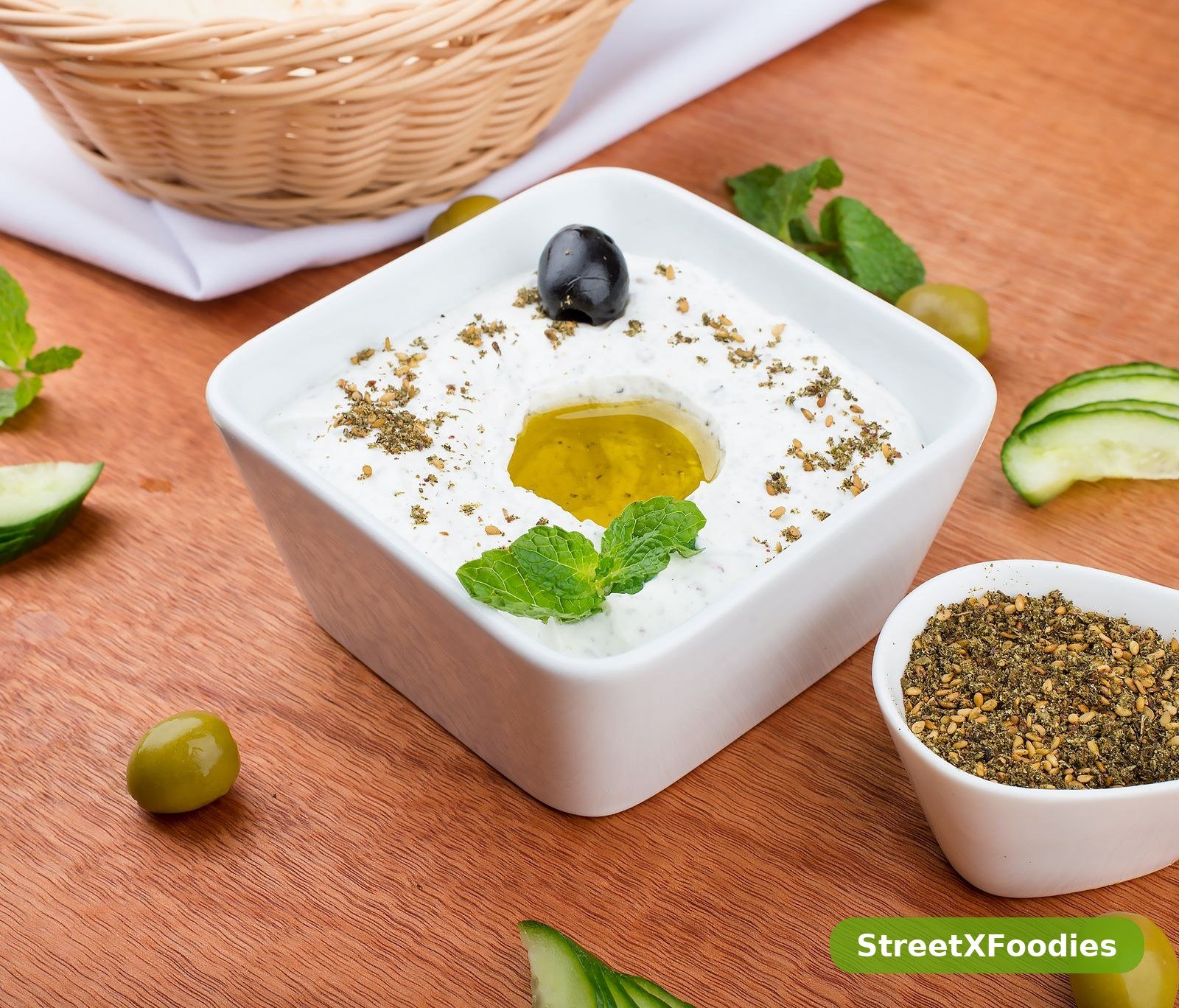
When you are ready to serve, spoon the tzatziki into a shallow bowl, use the back of the spoon to make a little swirl on top, and drizzle it with a good olive oil. Scatter over a little extra chopped dill and, if you like, a pinch of flaky salt. Serve it cold, with warm pita bread, grilled meats, or a tray of raw vegetables for dipping.
The Secret to Thick, Creamy Tzatziki
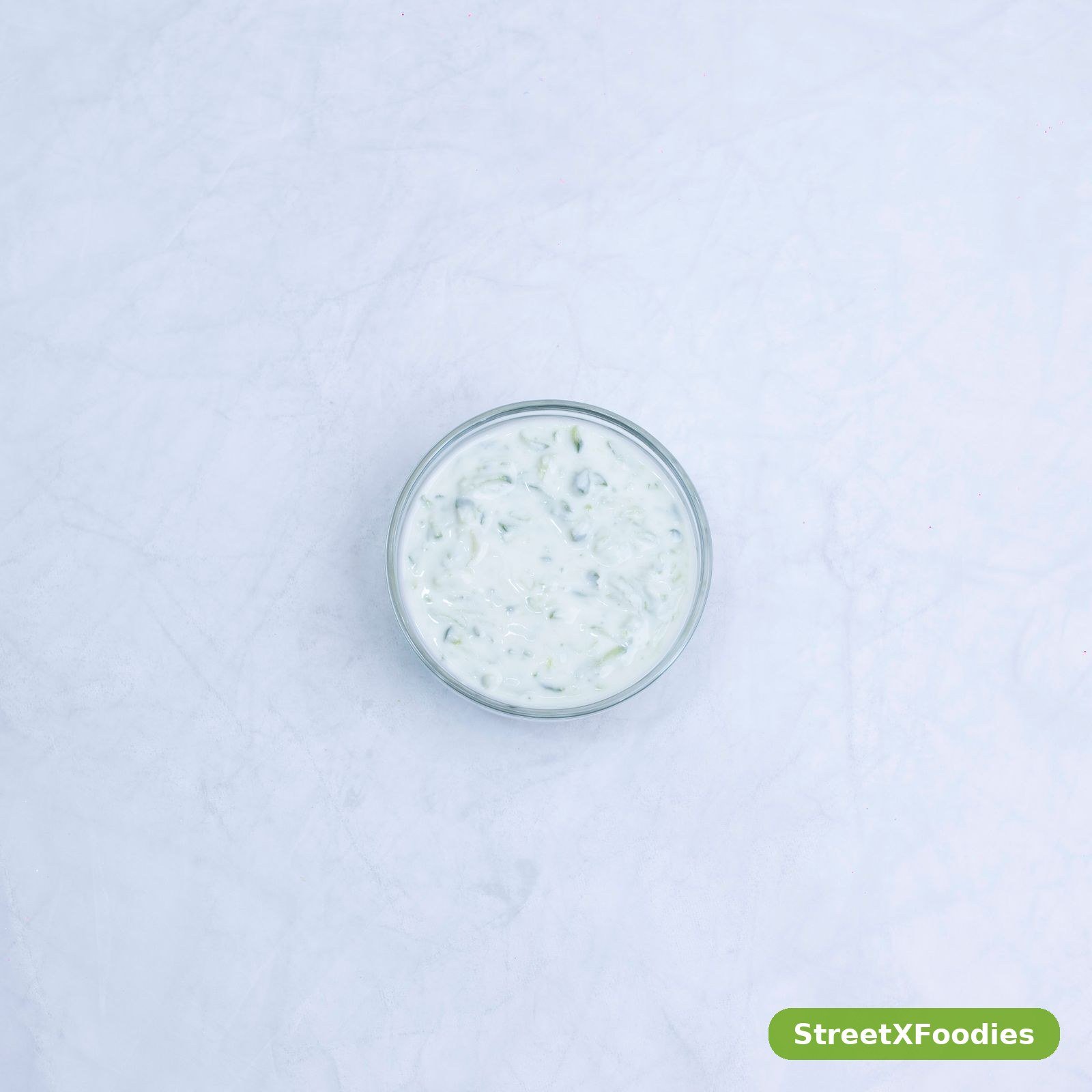
Every watery tzatziki I have ever been served had the same problem, and it was never the recipe. It was the cucumber. A cucumber is mostly water, and if you grate it straight into the yogurt, all that water goes in with it. Within an hour, your thick dip has turned into a thin soup, and there is no way back from that. Salting and squeezing is not a fussy extra step. It is the recipe.
The method is simple. Grate, salt, wait ten minutes, squeeze hard in a towel. I squeeze until my hands ache a little, and then I squeeze once more. The cucumber should feel like damp shreds, not wet ones. What you are left with is the flavour and the crunch of the cucumber without the water, and that is exactly what you want. Some people use a fine-mesh sieve and press the cucumber down with a spoon, and that works too, but a towel gets more water out with less effort.
The yogurt is the other half of the thickness equation. If you start with thin yogurt, you end with thin tzatziki, no matter how well you drain the cucumber. Full-fat Greek yogurt is the standard for a reason. It is already strained, so it is thick, rich, and tangy. Low-fat yogurt can work if that is what you have, but the texture will be lighter and the flavour less round. Non-fat yogurt will make a dip that tastes thin and a little sharp. If you are going to the trouble of making tzatziki at home, use the good yogurt. It is the main ingredient, and it shows.
One more small thing that helps: do not add the salt to the yogurt at the very beginning if you are going to serve the tzatziki the next day. Salt draws water out of the cucumber slowly, even after it is mixed in, so a dip that was perfect last night can be a little looser this morning. It is not a disaster, just stir it and, if needed, drain off a spoonful of liquid from the top. Better still, taste and adjust the salt just before serving. It takes five seconds and it keeps the texture right.
Variations to Try
Once you have the basic recipe down, tzatziki is very forgiving about variations, and a few small changes can take it in a completely different direction.
For a mint version, swap the dill for two tablespoons of finely chopped fresh mint and skip the vinegar. This is the version many Greek families make in the summer, and it is especially good with lamb. The mint makes the dip feel even cooler, and it pairs beautifully with grilled meats. If you cannot decide between dill and mint, use a tablespoon of each. They get along well.
For a spicier version, add a pinch of red pepper flakes or a finely chopped green chilli with the garlic. It will not make the dip hot, exactly, but it adds a little warmth at the back that works nicely with rich food. A pinch of smoked paprika on top, along with the olive oil, looks beautiful and adds a gentle smoky note.
For a lemon-herb version, add a teaspoon of finely grated lemon zest to the yogurt and a tablespoon of chopped fresh parsley alongside the dill. The zest brightens everything up, and the parsley adds a fresh, green flavour that makes the dip feel lighter. This is the version I make when I am serving tzatziki with fish or seafood.
You can also turn tzatziki into a salad dressing by whisking in a tablespoon or two of cold water, or a little extra lemon juice, until it reaches a pouring consistency. Drizzle it over a chopped salad, over grilled chicken, or over a grain bowl. It keeps for the same length of time as the dip, and it is a much better dressing than anything from a bottle.
If you like comparing methods, the classic ratios and technique are laid out clearly in the BBC Good Food tzatziki recipe, which is a good second opinion if you want to see how another kitchen handles the same dish. The proportions differ slightly from mine, which is normal. Tzatziki is a recipe with a hundred right answers, and the one you like best is the one you will keep making.
What to Serve with Tzatziki
This is where tzatziki earns its keep, because it goes with so much. The obvious partner is grilled meat. Chicken, lamb, pork, beef, it does not matter. A spoonful of cool tzatziki next to something hot off the grill is one of the great simple pleasures of summer cooking. It works as a sauce, as a dip, and as a cooling counterpoint all at once. If you are building a plate, start with the meat, add the tzatziki, and then fill in the rest with bread and salad.
It is also wonderful with roasted vegetables. I love it with our roasted cauliflower with tahini and lemon, where the cool yogurt plays against the warm, caramelised edges of the cauliflower. It is just as good spooned over crispy smashed potatoes with garlic and herbs, where it melts slightly into the cracks and turns a side dish into something people ask about. And if you are doing a spread of small plates, put it next to garlic butter mushrooms with fresh parsley and a basket of warm pita, and you have a meal that feels generous without much effort at all.
For something lighter, tzatziki is a natural partner for salads. It sits beautifully next to our creamy cucumber salad with dill, and the two together make a fresh, cool plate that is perfect for a hot afternoon. Use it as a dip for raw vegetables, cucumber sticks, carrot batons, bell pepper strips, and radishes. It is the kind of thing you put in the middle of the table at a gathering and watch disappear.
It also works inside food rather than next to it. Spread it inside a wrap with grilled chicken and shredded lettuce. Dollop it on a burger instead of mayonnaise. Spoon it over a baked potato. Use it as the sauce on a homemade gyro, with sliced meat, tomato, red onion, and warm pita. Once you start thinking of tzatziki as a sauce rather than just a dip, you will find a use for it almost every day it is in the fridge.
How to Store Tzatziki
Tzatziki keeps well in the fridge for three to four days in a sealed container. It will loosen slightly as it sits, because the cucumber continues to release a little moisture, so give it a good stir before serving and drain off any liquid that has collected on top. The flavour actually improves after the first day, as the garlic mellows and the dill settles in, so do not be afraid to make it ahead.
I would not freeze tzatziki. Yogurt does not freeze and thaw well, and the texture turns grainy and watery. It is a fresh dip, and it is meant to be eaten fresh. The good news is that it is so quick to make that there is never much reason to freeze it. If you have leftovers after a few days, use them up as a sandwich spread or thin them into a dressing rather than trying to save them.
One practical note: keep the tzatziki in a container with a tight lid, and keep it toward the back of the fridge where it is coldest. Garlic and yogurt both pick up other smells if they sit uncovered, and a bowl of tzatziki that tastes faintly of last night’s onions is not what anyone wants. A small glass container with a snap-on lid is perfect.
Common Mistakes and How to Avoid Them
The first mistake is the one I have already talked about, and it is the biggest one: not draining the cucumber. I know it feels like an extra step, and I know it is tempting to skip it. Do not skip it. Ten minutes of salting and a hard squeeze is the difference between tzatziki and cucumber soup.
The second mistake is too much garlic. Raw garlic gets stronger as it sits, so a dip that tastes perfectly garlicky when you make it can taste harsh an hour later. Three cloves for two cups of yogurt is the right balance for my taste. If you are sensitive to raw garlic, use two cloves, or grate the garlic and let it sit in the lemon juice for five minutes before adding it to the yogurt. The acid tames the harshness without losing the flavour.
The third mistake is using dried dill. I understand why people do it. Dried herbs are in the cupboard, fresh herbs need a trip to the shop. But tzatziki is a fresh dip, and it tastes like the ingredients in it. Dried dill tastes dusty and flat next to the bright flavour of fresh dill. If you can buy one fresh herb for this recipe, make it dill. It is worth the trip.
The fourth mistake is serving it too soon. Tzatziki needs its thirty minutes in the fridge. The flavours need time to meet each other. If you serve it the moment you make it, it will taste like yogurt with things in it. If you give it half an hour, it will taste like tzatziki. That is not a small difference.
Frequently Asked Questions
How long does homemade tzatziki last in the fridge?
Homemade tzatziki keeps for three to four days in the fridge in a sealed container. Stir it before serving, and drain off any liquid that has collected on top. The flavour is often better on the second day, once the garlic has mellowed and the dill has settled in. After four days, the cucumber starts to soften and the dip loses its freshness, so it is best to finish it by then or use the leftovers as a sandwich spread.
Can I make tzatziki without straining the yogurt?
You can, but only if you start with a proper thick Greek yogurt. Straining matters when the yogurt is loose, and most good full-fat Greek yogurts are already thick enough to use straight from the tub. If your yogurt slides off the spoon instead of holding its shape, strain it for an hour through a coffee filter or a clean kitchen towel first. It is a small step that makes a real difference to the finished dip.
Why is my tzatziki watery?
Almost always, the cucumber was not drained well enough. A cucumber is mostly water, and if that water goes into the yogurt, the dip thins out. Grate the cucumber, salt it, wait ten minutes, and squeeze it hard in a clean kitchen towel until no more liquid comes out. The other cause is thin yogurt, so use full-fat Greek yogurt and strain it if it looks loose. Both fixes are easy, and together they solve the problem every time.
Can I use regular yogurt instead of Greek yogurt?
Regular yogurt is thinner and less tangy than Greek yogurt, so it makes a looser, milder tzatziki. If it is all you have, strain it first through a coffee filter or a clean towel for at least two hours, or overnight in the fridge, until it is thick and spoonable. You will lose about a third of the volume to whey, so start with more yogurt than the recipe calls for. The result will be close to the real thing, though Greek yogurt is still the better choice.
Is tzatziki gluten-free and vegetarian?
Yes, tzatziki is naturally gluten-free and vegetarian. It is made from yogurt, cucumber, garlic, herbs, lemon, and olive oil, none of which contain gluten or meat. It is also suitable for many people following a low-carb diet, since it is low in carbohydrates and high in protein. If you are serving it to someone with a dairy allergy or intolerance, a thick coconut yogurt can be used instead, though the flavour will be different. Always check the label on your yogurt if you are cooking for someone with an allergy.
Final Thoughts
Tzatziki is one of those recipes that reminds me why I love cooking at home. It is not complicated, it is not expensive, and it does not need any special equipment. It just needs good ingredients, a little patience with the cucumber, and half an hour in the fridge. In return, it gives you a bowl of something cool, fresh, and genuinely delicious that makes everything on the table better.
I make it most weeks now, usually on a Friday when I am planning the weekend’s grilling, and it rarely lasts past Sunday. It goes on the table with whatever we are eating, and it always gets finished. If you have never made it at home, this is a good week to start. Grate the cucumber, squeeze it dry, stir everything together, and give it time to rest. Then tear off a piece of warm pita, scoop up a generous spoonful, and taste what all the fuss is about. I think you will understand, and I think you will make it again.
1 thought on “Homemade Tzatziki with Cucumber and Dill”