
Roasted Cauliflower with Tahini and Lemon

Cauliflower is one of those vegetables that people either love or think they do not like, and I used to be firmly in the second group. Boiled cauliflower at school put me off it for years, pale, soggy, and smelling faintly of a swimming pool. Then a friend served roasted cauliflower at dinner, golden at the edges, nutty and almost sweet, with a creamy tahini sauce and a squeeze of lemon, and I realised I had never actually tasted cauliflower cooked properly. This recipe is the one that changed my mind, and it has changed a few other minds since.
Roasting does something wonderful to cauliflower. The high heat caramelises the natural sugars, the edges go crisp and brown, and the flavour turns from bland and watery to nutty, sweet, and almost meaty. It is a complete transformation, and it takes nothing more than olive oil, salt, and a hot oven. The tahini sauce on top adds creaminess and a gentle sesame richness, and the lemon keeps the whole thing bright, so it never feels heavy or greasy.
I make this whenever I need a vegetable side that actually gets eaten, not just pushed around the plate. It works with roast chicken, grilled fish, and a big bowl of rice, and it is also substantial enough to be the main event, piled over grains or stuffed into a warm flatbread. It is cheap, it is healthy, and it is one of the easiest ways I know to make a vegetable the best thing on the table.
The best part is how little effort it takes. You cut the cauliflower into florets, toss them in oil and spices, roast them until golden, and whisk together a sauce that takes two minutes. There is no fancy technique, no special equipment, and no long list of ingredients. If you have a cauliflower sitting in the fridge and you are not sure what to do with it, this is what you should do with it.
Why You’ll Love This Recipe
This is the recipe that makes cauliflower taste like something you actually want to eat, not something you eat because it is good for you. Roasting brings out a sweetness you would never guess was there, and the browned edges taste almost like toasted nuts. The tahini sauce is creamy without being heavy, and the lemon and garlic in it cut through the richness, so every bite is balanced. It is a side dish that people ask about, which is not something I can say about many vegetables.
It is also a genuinely healthy dish that does not taste like a compromise. Cauliflower is low in calories, high in fibre, and a good source of vitamin C, and tahini adds healthy fats and a little protein. There is no cream, no cheese, and no heavy sauce, just good ingredients cooked well. If you are trying to eat more vegetables without feeling like you are on a diet, this is a very good place to start.
The recipe is flexible, too. You can make it spicy, smoky, or herby just by changing the spices, and you can serve it hot, warm, or at room temperature, which makes it perfect for a buffet or a packed lunch. It scales up easily for a crowd, it travels well, and the leftovers are excellent the next day. It is vegan, gluten-free, and dairy-free as written, so it suits almost everyone at the table without any special adjustments.
Ingredients You’ll Need
- 1 large cauliflower, about 900 g, leaves removed — look for a firm head with tight, white florets
- 3 tablespoons olive oil — enough to coat every floret so it roasts rather than steams
- 1 teaspoon ground cumin — warm and earthy, it suits cauliflower beautifully
- 1 teaspoon smoked paprika — adds a gentle smokiness and a lovely colour
- 1/2 teaspoon ground turmeric, optional — gives a golden colour and a warm flavour
- 1/2 teaspoon fine salt, plus more to taste — cauliflower needs proper seasoning to taste good
- 1/4 teaspoon black pepper, freshly ground
- 4 tablespoons tahini, well stirred — stir the jar first, because tahini separates as it sits
- 2 tablespoons lemon juice, freshly squeezed — bottled lemon juice tastes flat here
- 1 small garlic clove, finely grated — raw garlic in the sauce, so grate it very fine
- 3 to 4 tablespoons cold water — to thin the tahini to a pourable sauce
- 1 tablespoon honey or maple syrup, optional — just a touch, to balance the lemon
- 2 tablespoons fresh parsley, chopped, for serving — adds colour and freshness
- 1 tablespoon pomegranate seeds, optional, for serving — a sweet, jewel-like crunch
- 1 teaspoon lemon zest, for serving — brightens the whole dish
How to Make Roasted Cauliflower with Tahini and Lemon
Start by heating the oven to 220 degrees Celsius, because cauliflower needs a properly hot oven to roast rather than steam. While it heats, cut the cauliflower into florets. I cut the head in half first, then cut out the thick core, and then break the rest into pieces roughly the size of a golf ball. Try to keep them similar in size so they cook evenly, and do not make them too small, because tiny pieces burn before the bigger ones are done. If a floret is very large, cut it in half through the stem so it stays in one piece.
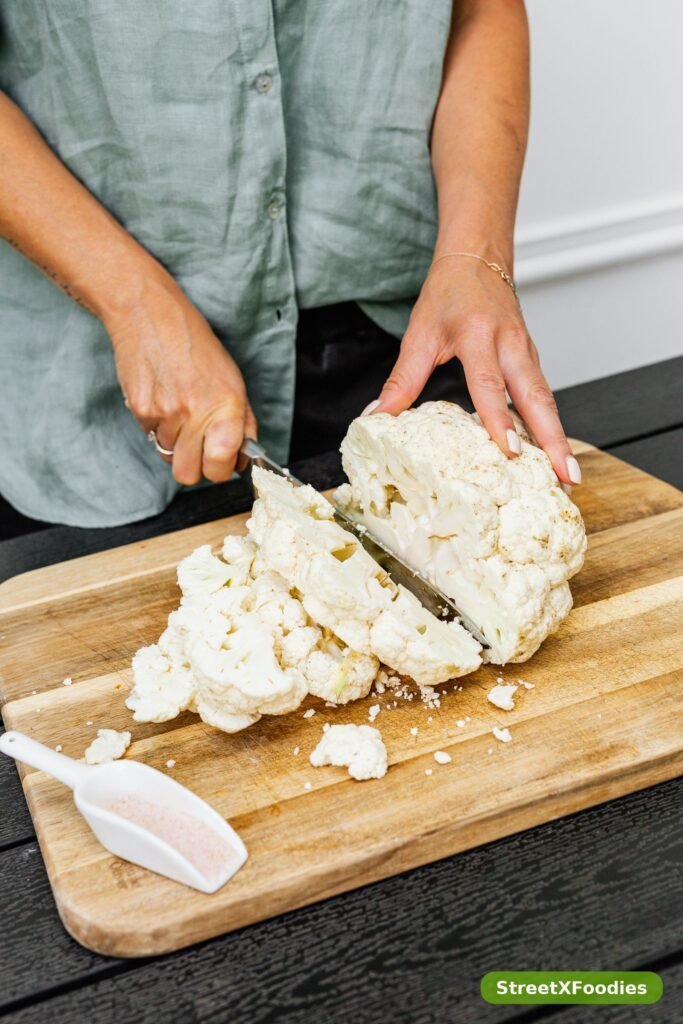
Put the florets in a large bowl and drizzle over the olive oil, then sprinkle over the cumin, smoked paprika, turmeric if you are using it, salt, and pepper. Toss everything together with your hands until every floret is coated, and do not be shy about getting oil into all the little nooks and crannies. The spices need the oil to stick, and the oil is what helps the edges crisp up. Spread the florets out on a large baking tray in a single layer, cut side down where you can, and leave space between them. If they are crowded, they will steam, and steamed cauliflower is exactly what we are trying to avoid.
Roast for twenty-five to thirty minutes, turning the florets once halfway through, until they are deep golden brown at the edges and tender in the middle. You should be able to slide a knife into the thickest part with no resistance, and the edges should look properly browned, not just pale gold. If they are still pale after thirty minutes, give them another five minutes, because colour is flavour here. A little charring on the edges is a good thing, and I always pick the darkest pieces for myself.
While the cauliflower roasts, make the tahini sauce. Put the tahini in a small bowl with the lemon juice, grated garlic, and a pinch of salt, and whisk it together. It will seize up and go thick and grainy at first, which alarms everyone the first time, but that is completely normal. Add cold water one tablespoon at a time, whisking after each addition, and it will suddenly turn smooth, pale, and creamy. Taste it, and add the honey if the lemon feels too sharp, or a little more lemon if it feels too rich. The sauce should be thick enough to coat a spoon, but thin enough to drizzle.
When the cauliflower is done, transfer it to a serving plate while it is still hot, and drizzle the tahini sauce generously over the top. Sprinkle with the chopped parsley, lemon zest, and pomegranate seeds if you are using them, and serve immediately. I like to put a little extra sauce in a small bowl on the side, because people always want more. The contrast between the hot, crispy cauliflower and the cool, creamy sauce is what makes this dish work, so do not wait too long to serve it.
Tips for the Best Roasted Cauliflower
Cut the florets evenly, and do not crowd the tray. These two things matter more than anything else, because they decide whether the cauliflower roasts or steams. Use your largest baking tray, and if you have to, use two trays rather than squeezing everything onto one. A hot oven is just as important, so give your oven time to reach 220 degrees before the tray goes in, and do not open the door every five minutes to check, because that drops the temperature.
Do not skimp on the oil. Cauliflower is a dry vegetable, and without enough oil it will dry out in the oven before it has a chance to brown. Three tablespoons sounds like a lot, but it is spread across a whole cauliflower, and it is what makes the edges crisp and golden. And season generously. Cauliflower is mild, and it needs salt and spice to taste like anything, so taste a floret after roasting and add more salt if it needs it. A final squeeze of lemon over the roasted cauliflower, before the sauce goes on, makes a surprising difference.
For the tahini sauce, the quality of the tahini matters. A good tahini is runny, pale, and pourable when stirred, while a bad one is thick, bitter, and hard to whisk. If your tahini is very thick, you may need a little more water than the recipe says, and that is fine. Whisk it patiently, adding water slowly, and it will come together. If it tastes bitter, a teaspoon of honey or maple syrup will balance it without making the sauce sweet.
It also helps to let the cauliflower cool for just a minute or two before you drizzle the sauce over it. If the florets are straight out of a very hot oven, the sauce thins out and slides off, while a minute of resting lets the edges firm up and the sauce cling properly. Serve the extra sauce in a small bowl on the side, so people can add more as they eat, and keep a lemon wedge on the plate for anyone who wants an extra squeeze. Those little touches are what turn a simple roasted vegetable into a dish people remember.
Variations to Try
For a spicy version, add half a teaspoon of chilli flakes or a teaspoon of harissa paste to the oil before tossing the cauliflower. It gives the dish a warm heat that works beautifully with the cool tahini. For a curry-spiced version, swap the cumin and paprika for a teaspoon of garam masala and half a teaspoon of ground coriander, and finish with fresh coriander instead of parsley. The method stays exactly the same, and the flavour changes completely.
You can also roast the cauliflower whole, which looks spectacular on a dinner table. Trim the leaves, rub the whole head with the spiced oil, and roast it at 200 degrees for fifty to sixty minutes, until a knife slides in easily. Slice it into wedges at the table and drizzle with tahini sauce. For a heartier meal, toss the roasted florets with cooked chickpeas, quinoa, and a handful of spinach, and you have a warm salad that works as a main course. A scattering of toasted almonds or pine nuts adds crunch, and crumbled feta on top makes it richer if you are not keeping it vegan.
If you like a smoky flavour, try adding a teaspoon of smoked paprika and finishing the dish with a drizzle of chilli oil. You can learn more about how tahini is made and why it separates in the jar from Food52’s roasted cauliflower with tahini and pomegranate molasses, which covers the sauce well. For a street-food style plate, serve the cauliflower next to easy street style corn, spicy, buttery and delicious, where the sweet corn and the nutty cauliflower balance each other nicely.
Serving Ideas
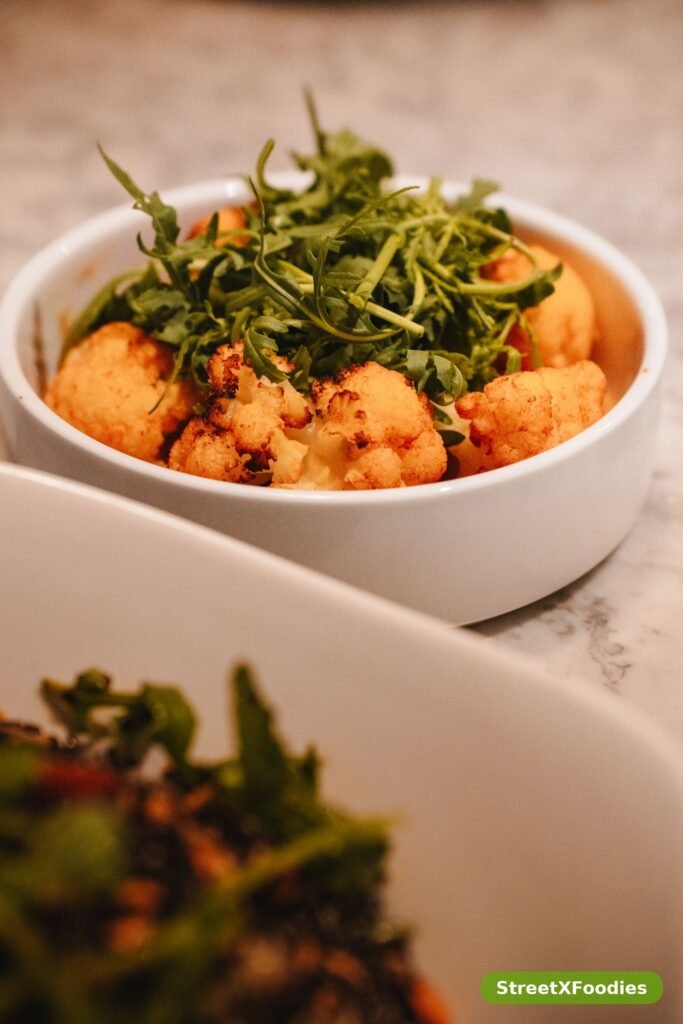
This cauliflower is wonderful as a side dish with roast chicken, grilled salmon, or lamb chops, because the tahini sauce works almost like a gravy, adding creaminess to the plate. I also serve it with rice and a simple salad for a light vegetarian dinner, and it is excellent piled into warm flatbreads with pickled onions and a little extra sauce, like a vegetarian kebab. For a buffet, serve it at room temperature on a large platter, with the sauce drizzled over the top and pomegranate scattered across it, because it looks beautiful and it holds up well.
For a more substantial meal, serve the cauliflower over a bowl of herbed couscous or quinoa, with a dollop of yoghurt and a handful of toasted seeds. It also works as part of a mezze spread, alongside hummus, flatbread, olives, and a tomato salad, where everyone can pick and choose. If you are serving a roast dinner, it makes a welcome change from the usual boiled vegetables, and it is usually the first side dish to disappear.
At a barbecue, roast the cauliflower while the meat is resting, and serve it warm with the rest of the spread. It goes especially well with one pan honey garlic pork chops with apples, where the sweet apples and the smoky cauliflower complement each other. For a quick lunch, reheat the leftovers and pile them into a wrap with salad and extra tahini sauce, and you have a meal that takes five minutes to put together.
Storage and Reheating
Leftover roasted cauliflower keeps in an airtight container in the fridge for up to three days. Store the tahini sauce separately if you can, because the cauliflower stays crisper that way, and the sauce keeps for up to five days in a jar in the fridge. The sauce will thicken as it sits, so whisk in a teaspoon of cold water before serving to bring it back to a pourable consistency.
To reheat the cauliflower, spread it on a baking tray and roast it in a hot oven at 200 degrees for eight to ten minutes, until it is hot and the edges crisp up again. The microwave will warm it, but it will also make it soft, so the oven is the better choice. Do not freeze roasted cauliflower, because it goes watery and mushy when thawed. If you have a lot left over, turn it into soup instead: blend it with stock and a spoonful of tahini, and you have a lovely lunch for the next day.
Frequently Asked Questions
Why is my roasted cauliflower soggy instead of crispy?
Soggy cauliflower almost always means the tray was too crowded or the oven was not hot enough. Cauliflower releases water as it cooks, and if the florets are packed together, that water turns to steam and stops them browning. Use a large tray, leave space between the florets, and make sure your oven is properly hot at 220 degrees before the tray goes in. Also make sure the florets are dry before you oil them, because water on the surface stops the oil from doing its job. For a similar lesson in getting vegetables crisp, crispy smashed potatoes with garlic and herbs use the same principles of space and heat.
Can I use frozen cauliflower for this recipe?
You can, but the result will not be quite as crisp as fresh cauliflower. Frozen cauliflower holds a lot of water, so thaw it completely, pat it very dry with a clean tea towel, and roast it at a high heat, giving it a few extra minutes. It works better in a warm salad or a grain bowl, where a little softness does not matter, than as a standalone side dish. If you can, use fresh cauliflower for this recipe, and save the frozen kind for soups and curries, where its texture does not matter.
How do I stop the tahini sauce going thick and grainy?
Tahini sauce always goes thick and grainy when you first add lemon juice, and that is completely normal. The trick is to keep whisking and add cold water one tablespoon at a time, and it will suddenly turn smooth and creamy. If it is still grainy, your tahini may be old or of poor quality, and a fresh jar will make a big difference. A good tahini should be runny and pourable when stirred. You can read more about getting tahini sauce right in Food52’s golden roasted cauliflower with tahini recipe, which explains the whisking process clearly.
Is this recipe vegan and gluten-free?
Yes, as written, this recipe is both vegan and gluten-free. The tahini sauce is made from sesame seeds, lemon, garlic, and water, with no dairy, and there is no flour or gluten in the dish at all. If you add the optional honey, it is no longer strictly vegan, so use maple syrup instead if that matters to you. The pomegranate and parsley garnish are optional, but they add colour and freshness, so I recommend them.
What can I serve with roasted cauliflower?
It goes with almost any roast meat, grilled fish, or grain-based meal. Try it with roast chicken, salmon, or lamb, or serve it as a main course over rice, couscous, or quinoa. It is also excellent in a wrap or flatbread, and as part of a mezze spread. For a street-food style dinner, serve it alongside chicken street food recipes for dinner, easy, crispy and flavourful, where the cauliflower adds a fresh, vegetable note to a rich meal.
Can I make roasted cauliflower ahead of time?
Yes, you can roast the cauliflower up to a day ahead and keep it in the fridge, then re-crisp it in a hot oven for eight to ten minutes before serving. The tahini sauce can be made up to five days ahead and kept in a jar in the fridge, whisking in a little water before serving. Do not drizzle the sauce over the cauliflower until just before serving, because it will make the crispy edges go soft. For a party, roast the cauliflower an hour ahead and serve it at room temperature, which works perfectly.