
Funnel Cake with Powdered Sugar

There’s a smell that hits you the second you walk into a county fair, before you’ve even seen a single ride. It’s hot oil, sugar, and something fried and golden, and it pulls you toward the food stands whether you meant to go there or not. For me, that smell has always meant one thing: funnel cake. I can still picture the first one I ever had, handed to me on a paper plate so hot I had to juggle it between my hands, the powdered sugar already drifting onto my shirt. I ate the whole thing standing up, burning my fingers slightly, and I didn’t care at all.
The funny thing is, for years I assumed funnel cake was one of those foods you could only get at a fair. Something about the name made it sound like you needed special equipment, or a vendor’s setup, or at least a deep fryer the size of a bathtub. It turns out none of that is true. A funnel cake is really just a pancake batter, poured in a swirl into hot oil, fried for a couple of minutes, and buried under powdered sugar. That’s it. And once you make it at home, you realise the fair version was never doing anything you can’t do in your own kitchen, usually better, because you’re eating it thirty seconds after it comes out of the oil instead of five minutes later.
This recipe is the one I come back to every time someone asks for a fun dessert, or when we’ve got people over and I want something that feels like an occasion without actually being difficult. It uses pantry ingredients, takes about half an hour from start to finish, and it makes people happy in a way very few desserts do. There’s something about handing someone a warm, sugary, crispy tangle of fried dough that makes the whole room feel like a fairground for a minute.
What Is a Funnel Cake, Really?
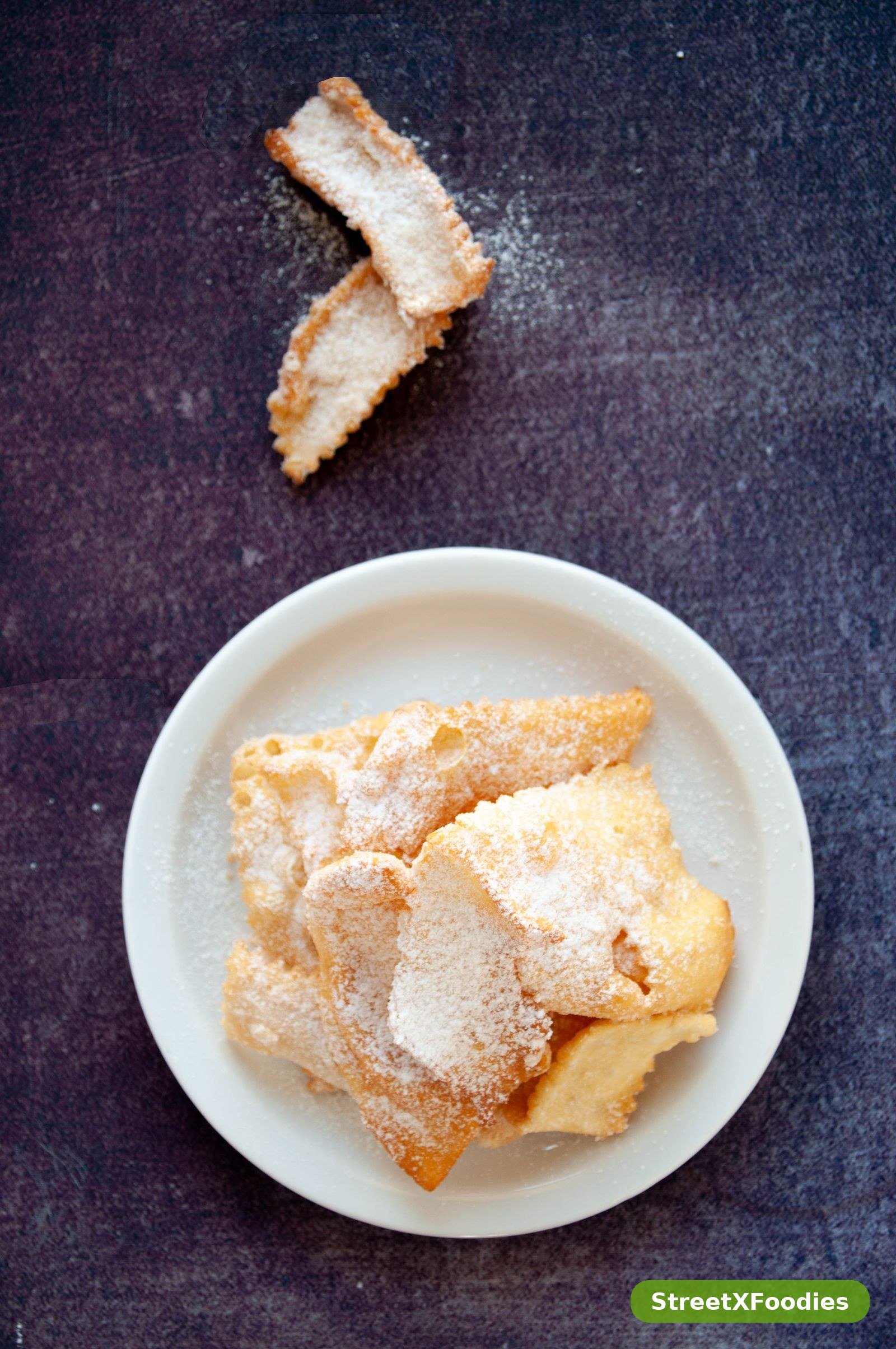
A funnel cake is a fried batter cake, made by pouring batter through a funnel (or, these days, a squeeze bottle or a measuring jug with a spout) into hot oil in a thin, looping stream. The batter sets almost as soon as it hits the oil, so the loops hold their shape and fuse into a lacy, web-like disc, crisp on the edges and soft in the middle. It gets lifted out, drained for a few seconds, and dusted generously with powdered sugar while it’s still hot, so the sugar melts just slightly into the surface.
The idea is older than the American fairground. Fried batter cakes show up in food history all over the world, and the funnel cake as we know it traces back to the Pennsylvania Dutch, who brought a version of it with them from Germany, where similar fried cakes were made for festivals and celebrations. It became a fairground staple in the United States in the early twentieth century, and by now it’s as much a part of the fair as the Ferris wheel. If you want the fuller backstory, there’s a good overview of the funnel cake’s history and its Pennsylvania Dutch roots on Wikipedia.
What I like about the history is that it explains why the recipe is so forgiving. This was never a precise, patisserie kind of dessert. It was festival food, made in big batches, in a hurry, by people who were cooking for a crowd. The batter is a simple one, the technique is more about confidence than skill, and the result is delicious even when it comes out a little wonky. In fact, I’d argue the slightly irregular ones are the best, because they have more crispy edges.
If you’ve already got a soft spot for fried sweets, this sits in very good company on this site. Our street-style jalebi with cardamom syrup is another fairground-style treat that comes out of hot oil and straight into something sweet, and it has the same joyful, eat-it-while-it’s-warm energy.
The Batter: Simple, But Worth Getting Right
The batter is the whole recipe, really. Everything else is just hot oil and sugar. And the good news is that it’s made from things you almost certainly already have: flour, sugar, baking powder, salt, eggs, milk, and vanilla. No yeast, no resting time, no special flour. It comes together in one bowl in about five minutes.
The texture you’re aiming for is the most important thing to understand. The batter should be thinner than pancake batter, but thicker than cream. Think of it like a thin cake batter, or like the consistency of runny honey. It needs to flow smoothly out of a funnel or a squeeze bottle in a steady stream, without dripping too fast and without clogging. If it’s too thick, it won’t pour in those nice thin ribbons, and you’ll end up with a lumpy, doughy cake. If it’s too thin, the ribbons spread out too much and the cake falls apart in the oil.
The easiest way to check is the spoon test. Dip a spoon in the batter and lift it out. It should fall off the spoon in a smooth, continuous ribbon that holds together for a second before breaking. If it plops off in blobs, add milk a tablespoon at a time. If it runs off like water, whisk in a tablespoon of flour. Don’t stress about this too much on your first try, because even a slightly-off batter still fries into something tasty. You’ll get a feel for it after the first cake.
A couple of ingredients deserve a quick note. The baking powder is what gives the cake its lightness. Without it, the batter fries up dense and heavy, more like a doughnut that never quite puffed. Make sure yours is fresh, because baking powder loses its strength after about six months in the cupboard. If you’re not sure, drop half a teaspoon into a little hot water. If it fizzes enthusiastically, it’s fine. If it just sits there, it’s time for a new tin.
The vanilla is optional in the strictest sense, but I wouldn’t skip it. A teaspoon of vanilla in the batter gives the cake a warm, almost doughnut-shop flavour that plain batter doesn’t have. And a pinch of salt matters more than you’d think. It doesn’t make the cake salty, it just makes the sweetness taste rounder and less flat. The same trick shows up in almost every good dessert, and it’s the reason our classic tiramisu with mascarpone cream works so well, even though it’s a completely different kind of sweet.
Ingredients You’ll Need
This makes about 4 medium funnel cakes, enough for four people, or two people who are very committed. Everything is easy to find, and I’ve added notes where a choice actually matters.
For the batter:
- 2 cups (250g) all-purpose flour
- 2 tablespoons granulated sugar
- 2 teaspoons baking powder
- 1/2 teaspoon salt
- 2 large eggs, at room temperature if you can manage it
- 1 1/2 cups (360ml) whole milk
- 1 teaspoon vanilla extract
- 1/2 teaspoon ground cinnamon (optional, but lovely)
- Vegetable oil or another neutral oil, for frying (about 3 to 4 cups, depending on your pan)
For serving:
- 1/2 cup powdered sugar, for dusting (you’ll use most of it)
- Optional toppings: strawberry sauce, chocolate sauce, whipped cream, fresh berries, sliced bananas, caramel sauce, or a scoop of vanilla ice cream
A note on the oil: you want a neutral oil with a high smoke point, which is why vegetable oil, canola oil, or sunflower oil all work well. Olive oil is not the right choice here. It has a lower smoke point and a flavour that doesn’t belong in a sweet fried cake. You don’t need to buy a special frying oil, just whatever neutral oil you already cook with. And you’ll reuse most of it, since the cakes absorb very little. Once it cools, you can strain it through a fine sieve and keep it in a jar for the next time you fry something.
On the milk, whole milk gives the richest result, but semi-skimmed works fine too. I’d avoid skimmed milk here, because the batter needs a little fat to fry up tender rather than tough. And if you need a dairy-free version, oat milk is the best substitute I’ve tried. It keeps the batter smooth and doesn’t add any flavour of its own.
Equipment: You Probably Already Own Everything
This is the part that surprises people. You do not need a funnel, despite the name. Here’s what actually helps:
- A heavy pan or pot. A cast iron skillet is ideal, because it holds its temperature steady. A deep frying pan or a medium saucepan works too. You want the oil about an inch and a half deep, so pick a pan with sides high enough to contain it safely.
- Something to pour the batter with. A kitchen funnel is the traditional tool, and it works beautifully. But a plastic squeeze bottle, the kind you use for sauces, is honestly easier, because you can control the flow with your hand. A measuring jug with a spout works as well, or even a zip-top bag with a small corner snipped off. Use whatever you’ve got. If you do use a funnel, keep your finger over the bottom opening until you’re ready to pour, then lift it and let the batter flow.
- Tongs or a slotted spoon. For flipping the cake and lifting it out of the oil. A wide slotted spatula works too, but tongs give you more control.
- A wire rack over a baking tray, or a plate lined with paper towels. For draining. The wire rack is better, because air circulates underneath and the bottom stays crisp. Paper towels work fine in a pinch.
- A thermometer, if you have one. It’s not essential, but it takes the guesswork out of the oil temperature. A simple kitchen thermometer clipped to the side of the pan is enough. If you don’t have one, I’ll show you the old-fashioned test below.
- A fine sieve or a small shaker. For dusting the powdered sugar evenly. A sieve gives you that lovely, even snow-dusted look. A spoon will do, but the sugar tends to land in clumps.
That’s the whole list. No deep fryer, no special mould, no equipment you’ll only use once a year. And that’s part of why this recipe is such a good one to have in your back pocket.
How to Make Funnel Cake with Powdered Sugar
Here’s the full method, step by step. Read it through once before you start, because once the oil is hot, everything moves fast. A funnel cake takes about two minutes to fry, so you want everything ready before the first one goes in.
Step 1: Whisk the dry ingredients. In a large bowl, whisk together the flour, sugar, baking powder, salt, and cinnamon if you’re using it. Whisking rather than just stirring matters here, because it breaks up any lumps in the flour and distributes the baking powder evenly. If the baking powder is clumped in one spot, that spot will puff up oddly and the rest won’t. Thirty seconds of whisking saves you from that.
Step 2: Whisk the wet ingredients separately. In a second bowl or a large measuring jug, whisk the eggs until they’re well beaten, then whisk in the milk and vanilla. Using a jug for the wet ingredients is a small thing that makes the next step easier, because you can pour slowly and steadily. If you don’t have a big enough jug, a bowl is fine.
Step 3: Combine, but don’t overmix. Pour the wet ingredients into the dry ingredients and whisk gently until just combined. A few small lumps are absolutely fine, in fact they’re better than a perfectly smooth batter. Overmixing develops the gluten in the flour, and that makes the cake tough and chewy instead of light and crisp. Stir until you can’t see any dry flour, then stop. The batter should be smooth enough to pour, and if it looks slightly lumpy, that’s normal. Let it sit for five minutes while the oil heats. That short rest lets the flour hydrate and the baking powder start working, and it makes a noticeable difference to the texture.
Step 4: Heat the oil. Pour oil into your pan to a depth of about an inch and a half, and heat it over medium-high heat until it reaches 190°C (375°F). If you have a thermometer, use it. If you don’t, here’s the old test: drop a tiny bit of batter into the oil. If it sinks to the bottom and stays there, the oil is too cold. If it sizzles violently and turns dark brown in seconds, the oil is too hot. What you want is for the batter to sink just slightly, then rise to the surface within a second or two, sizzling steadily and turning golden. That steady sizzle is the sound of the right temperature.
Oil temperature is the one thing worth paying attention to in this whole recipe. Too cold, and the batter absorbs oil instead of crisping, and you get a greasy, soggy cake. Too hot, and the outside burns before the inside cooks through. If the first cake comes out darker than you expected, turn the heat down a notch and wait a minute before the next one. If it comes out pale and oily, turn the heat up. The first cake is always a test run, and even the test run tastes good.
Step 5: Pour the batter in a swirl. This is the fun part, and it’s easier than it looks. Hold your funnel, squeeze bottle, or jug about six inches above the oil. Start pouring in the centre and move your hand in a slow spiral outward, then loop back across the centre a few times, making a loose, lacy web about six or seven inches across. Don’t aim for perfection. Overlapping lines, random loops, a bit of chaos, that’s exactly what you want. The batter sets on contact with the oil, so the shape you pour is roughly the shape you get.
Two practical tips. First, keep the stream thin. A thick stream makes a heavy cake. You want ribbons about as thick as a pencil. If the batter is coming out too fast, raise your hand a little higher, which thins the stream, or pour more slowly. Second, don’t make the cake too big. A seven-inch cake is much easier to flip than a ten-inch one, and it cooks more evenly. You can always make more cakes. You can’t easily rescue one that broke in half because it was too wide to turn.
Step 6: Fry for about 90 seconds per side. Let the cake fry undisturbed for about a minute and a half, until the underside is deep golden brown. You’ll see the edges start to crisp and curl slightly. Then slide your tongs or spatula underneath and flip it over in one confident motion. Don’t hesitate halfway, that’s how cakes break. Fry the second side for another 60 to 90 seconds, until it’s the same golden colour.
Step 7: Drain, dust, and serve immediately. Lift the cake out of the oil and let it drip for a few seconds over the pan, then set it on the wire rack or paper towels. While it’s still hot, dust it generously with powdered sugar through a fine sieve. Don’t be shy with the sugar. The whole point of a funnel cake is that snowy white top, and the sugar melts slightly into the hot surface, which is exactly what you want. Serve it right away, while it’s still warm and crisp. Funnel cake waits for no one, and it’s at its best in the first five minutes.
The Pouring Technique: A Few Things I Learned the Hard Way
The first time I made funnel cake at home, I poured the batter in a neat, careful spiral, the way you’d draw a snail shell. It looked very tidy, and it fried into something that was basically a thick pancake with holes in it. Dense in the middle, no lacy edges, not really a funnel cake at all. The lesson was that funnel cake is not about neatness. It’s about letting the batter wander.
What works better is a loose, random pattern. Big loops, crossing lines, a bit of zigzag, some areas where the batter overlaps and some where there’s a gap. The gaps are what make it crispy, because the hot oil gets in there and fries every edge. The overlaps are what hold it together. Aim for a web, not a disc.
Another thing I learned: keep your hand moving at a steady speed, and don’t stop the stream mid-cake. If you pause, the batter pools in one spot and you get a thick blob. If you keep moving, even if the pattern is messy, you get even ribbons. It helps to practise the motion once over the bowl before you go anywhere near the hot oil, just to get a feel for the flow.
And if your first cake looks like a abstract sculpture rather than a fairground classic, eat it anyway. It will still taste wonderful, and by the third one you’ll be pouring like you’ve done it for years. The learning curve here is about ten minutes long.
Toppings and Variations
Powdered sugar on its own is the classic, and honestly, it’s my favourite way to eat funnel cake. But once you’ve got the basic recipe down, it’s a wonderful blank canvas. Here are the variations that actually work, rather than the ones that just sound good.
Strawberry funnel cake. Spoon warm strawberry sauce or macerated fresh strawberries over the top, add a dollop of whipped cream, and dust with powdered sugar last. The tartness of the strawberries cuts through the sweetness beautifully. This is the version you’ll see at most fairs, and for good reason.
Chocolate funnel cake. Drizzle warm chocolate sauce over the cake, add a little whipped cream, and finish with a light dusting of powdered sugar. If you want to go further, add chocolate chips to the batter, about a quarter cup, though they can make pouring slightly trickier.
Cinnamon sugar funnel cake. Skip the powdered sugar and toss the hot cake in cinnamon sugar instead, the same mixture you’d use on churros. It’s a different experience, more like a doughnut, and it’s very good. A pinch of nutmeg in the cinnamon sugar takes it even further.
Funnel cake sundae. Put the warm cake on a plate, add a scoop of vanilla ice cream, drizzle with caramel or chocolate sauce, and finish with powdered sugar. The hot-cold contrast is wonderful, though you should eat it fast, because the ice cream melts quickly against the warm cake.
Savoury funnel cake. This one surprises people, but it works. Leave the sugar and vanilla out of the batter, add a pinch of black pepper and a little garlic powder, and serve the cake with a cheese sauce or a spicy mayo drizzle. It’s more of a snack than a dessert, and it makes a fun starter for a casual dinner. Not traditional, but genuinely tasty.
For a flavoured batter, the easiest changes are small ones. A tablespoon of cocoa powder in the dry ingredients makes a chocolate funnel cake, though you’ll need an extra tablespoon of milk to keep the batter thin enough to pour. A little lemon zest in the batter is lovely with a berry topping. And a splash of almond extract instead of vanilla gives the cake a completely different, almost marzipan-like character. Just don’t add too much, almond extract is strong, and a quarter teaspoon is plenty.
If you like desserts that invite this kind of playing around, our homemade cinnamon rolls with cream cheese frosting are another one where a simple base turns into a dozen different treats depending on what you add.
Common Mistakes and How to Fix Them
Most funnel cake problems come down to three things: the batter, the oil, or the pour. Here’s how to spot each one and what to do about it.
The cake is greasy and soggy. Almost always, the oil wasn’t hot enough. The batter sat in the oil soaking it up instead of crisping on contact. Check your temperature before the next cake, and let the oil come back up to heat between batches. The oil cools down every time you add cold batter, so give it a minute to recover. If you don’t have a thermometer, use the batter-drop test again before each cake.
The cake is dark outside and raw inside. The oil was too hot, or the ribbons were too thick. Turn the heat down, wait a minute, and pour a thinner stream next time. If your batter is very thick, thin it with a tablespoon of milk.
The cake falls apart when you flip it. Usually this means the batter was too thin, so the ribbons didn’t fuse properly, or the cake was too big to flip in one go. Add a tablespoon of flour to the batter and make the next cake a little smaller. Also, make sure you’re sliding the spatula fully underneath before lifting, rather than trying to flip it from the edge.
The batter won’t pour smoothly. It’s probably too thick, or your funnel opening is too small. Thin the batter with milk, a tablespoon at a time, until it flows in a steady stream. If you’re using a funnel, a standard kitchen funnel with about a half-inch opening works well. A very narrow funnel will clog, especially if there are any lumps in the batter.
The powdered sugar disappears. This happens when you dust the cake too early, while it’s still dripping with oil, or when the cake is so hot the sugar melts completely into it. Let the cake drain for a few seconds first, and dust it just before serving. If you want that thick snowy look, dust it twice, once when it comes out of the oil and once more right before it goes to the table.
The cake tastes bland. Check two things: did you add enough salt, and did you add the vanilla? Both are easy to forget, and both make a real difference. A little more sugar in the batter helps too, but don’t overdo it, because too much sugar makes the batter brown too fast in the oil.
For more on getting frying right in general, the Taste of Home funnel cake recipe has a useful take on the same technique, and it’s worth a look if you want to compare methods.
Storing and Reheating
I’ll be honest: funnel cake is best eaten fresh, within minutes of frying. That’s the whole point of it. But if you’ve made a batch and have leftovers, or if you’re cooking for a crowd and want to fry ahead, here’s what works.
Let the cakes cool completely, then store them in an airtight container at room temperature for up to a day. Don’t dust them with powdered sugar until you’re ready to serve, because the sugar absorbs moisture overnight and turns into a sticky glaze. To reheat, put them in a 180°C (350°F) oven for about five minutes, or in an air fryer at the same temperature for two to three minutes. They won’t be quite as crisp as fresh, but they come surprisingly close. Don’t use the microwave. It makes them soft and chewy, which is the opposite of what you want.
You can also make the batter ahead. Mix it, cover it, and keep it in the fridge for up to 24 hours. Give it a good whisk before using it, because it thickens slightly as it sits, and you may need to add a splash of milk to get it flowing again. Don’t leave it longer than a day, because the baking powder loses its lift over time.
Freezing doesn’t really work for funnel cake. The texture suffers too much. If you’ve got leftover batter, it’s better to fry the cakes and store them as above than to freeze anything.
What to Serve with Funnel Cake
A funnel cake on its own is a complete dessert, but if you’re serving it as part of something bigger, a few pairings work especially well. Fresh berries are the obvious one, because their tartness balances the sweetness. A fruit salad on the side turns it into a proper dessert course rather than just a snack. Coffee is the natural drink with it, and a strong black coffee next to a warm, sugary funnel cake is one of life’s small pleasures.
For a fairground-style spread, serve funnel cake alongside other fried sweets and let people pick. Our chocolate lava cakes with molten centers make a good partner, because they’re rich and chocolatey where the funnel cake is light and crisp. And if you’re feeding kids, set up a little topping station with bowls of powdered sugar, chocolate sauce, strawberries, and whipped cream, and let them build their own. It keeps them busy for ages, and they eat every bite.

Frequently Asked Questions
Do I need a funnel to make funnel cake?
No. The name comes from the traditional tool, but a squeeze bottle, a measuring jug with a spout, or even a zip-top bag with a corner cut off all work just as well. A squeeze bottle is actually easier for most people, because you control the flow with your hand. Whatever you use, the key is a steady, thin stream of batter.
Can I make funnel cake batter ahead of time?
Yes, up to 24 hours ahead. Mix the batter, cover the bowl, and keep it in the fridge. Whisk it well before using, and add a splash of milk if it has thickened. Don’t keep it longer than a day, because the baking powder starts to lose its power and the cakes won’t puff up as well.
Why is my funnel cake greasy?
The oil wasn’t hot enough. When batter hits oil that is too cool, it absorbs the oil instead of crisping. Heat the oil to 190°C (375°F) and let it come back up to temperature between batches. A thermometer helps, but the batter-drop test works too: a little batter should sizzle and rise to the surface within a second or two.
Can I make funnel cake in an air fryer?
Not really, no. The batter is a liquid, and it needs hot oil to set into shape. In an air fryer, it would just drip through the basket. If you want a similar treat without deep frying, try a baked version, pouring the batter into a greased muffin tin, but be aware the result is more like a small sponge cake than a real funnel cake. The hot oil is what makes it a funnel cake.
How do I keep funnel cake crispy?
Serve it immediately, on a wire rack rather than a flat plate, so air circulates underneath. Don’t stack the cakes, and don’t cover them while they’re warm, because the steam makes them soggy. Dust with powdered sugar at the last moment, not ahead of time. If you need to hold them for a few minutes, keep them in a warm oven, around 100°C (200°F), on a wire rack.
Can I make funnel cake gluten-free?
Yes. Replace the all-purpose flour with a 1-to-1 gluten-free flour blend, the kind that already contains xanthan gum. The batter may need an extra tablespoon or two of milk, because gluten-free flour absorbs more liquid. The result is very slightly denser than the regular version, but still crisp and delicious. Don’t use a single gluten-free flour like rice flour on its own, because the texture won’t hold together.
That’s really all there is to it. A bowl, a pan of hot oil, a handful of sugar, and about half an hour. Funnel cake is one of those recipes that looks like it belongs to the fairground, but once you’ve made it at home, it belongs to your kitchen too. Make a batch this weekend, dust them while they’re still warm, and eat them standing up in the kitchen, powdered sugar on your shirt, the way they’re meant to be eaten. Some foods are better with a little mess, and this is one of them.