
Baked Chicken Cordon Bleu with Dijon Sauce
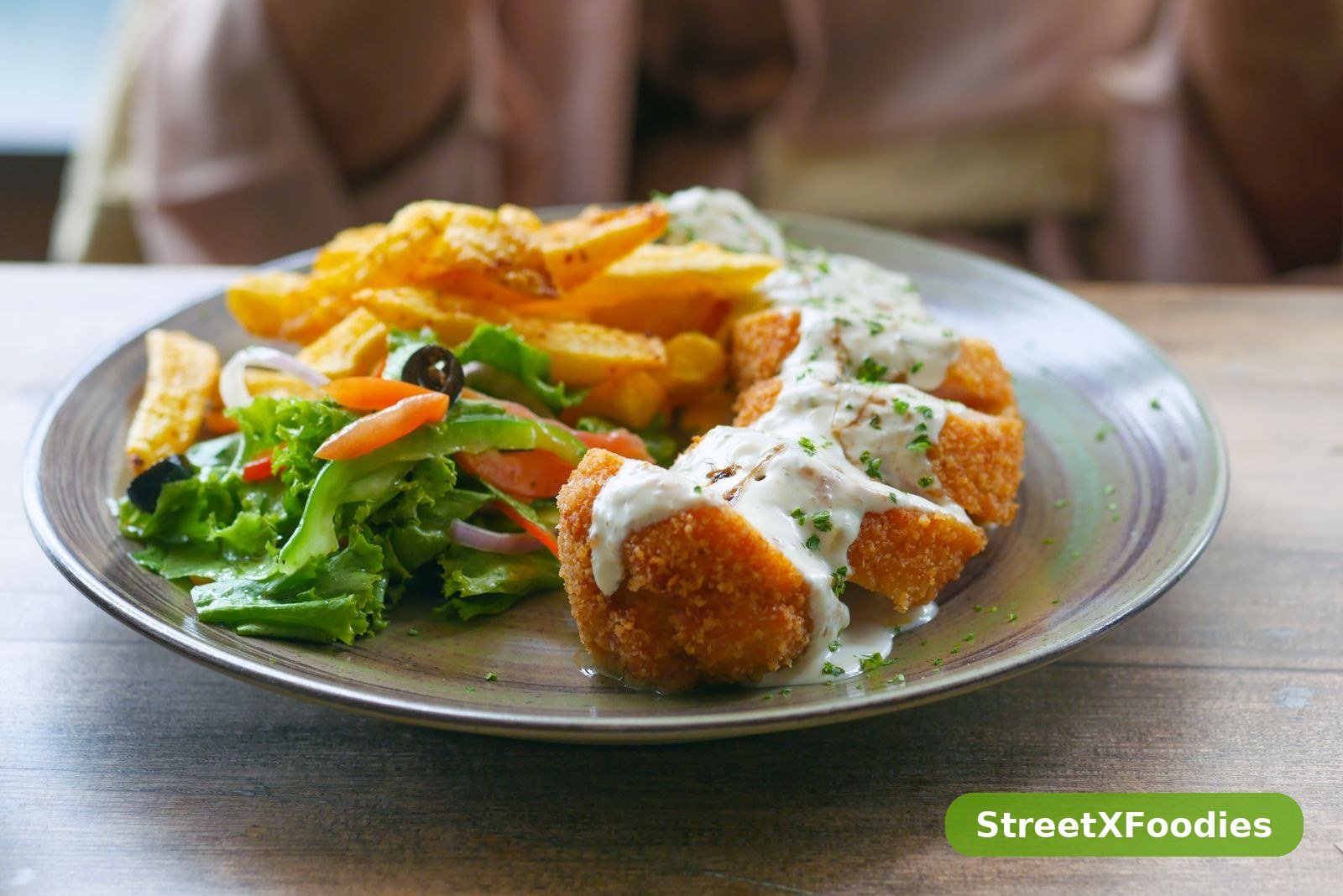
Chicken cordon bleu is one of those dishes that sounds far more difficult than it actually is. The name is French, the idea is classic — chicken wrapped around ham and cheese, crumbed and baked until golden, then sliced open to reveal that molten, gooey middle — and the first time someone serves it to you, you assume it took hours and a lot of skill. But honestly, once you’ve made it once, you realise it’s just a stuffed chicken breast with a crunchy coating, and the whole thing is far more forgiving than its fancy name suggests.
I first made cordon bleu for a dinner party years ago, when I wanted something that would impress people without me spending the whole evening in the kitchen. I rolled the chicken, I crumbed it, I put it in the oven, and then I actually got to sit down with my guests while it cooked. When I sliced into the first one at the table and the cheese came oozing out, everyone went quiet for a moment in the best possible way. It’s been in my rotation ever since — the kind of dish that makes an ordinary evening feel like an occasion.
The baked version is my preferred way to make it. Traditional cordon bleu is often pan-fried, which works, but baking gives you a more even, golden crust without standing over a pan and without the kitchen filling with oil smoke. The oven does the work, the coating crisps up beautifully, and the cheese melts slowly inside without bursting out everywhere. And the Dijon sauce — a simple, creamy, tangy sauce you whisk together in five minutes — is what takes it from good to genuinely special.
If you’ve never rolled a chicken breast before, don’t worry. I’ll walk you through it step by step, and I’ll tell you the tricks that keep the cheese where it belongs. Once you’ve done it once, you’ll wonder why you ever thought it was complicated. And if you’re in the mood for a different kind of stuffed or layered chicken, the chicken Marsala with mushrooms and cream on this site has that same restaurant feel with a completely different sauce.
Why You’ll Love This Recipe
The moment you slice into it is the whole reason to make this dish. That first cut, when the cheese starts to ooze out and the ham is revealed in layers inside the golden chicken — it’s genuinely satisfying, and it’s the kind of thing that makes people at the table lean in. It looks like you spent hours on it, and it tastes like something from a good restaurant, but the actual work is about twenty minutes of hands-on time.
Baking instead of frying makes this much easier and a little lighter too. You don’t have to worry about oil temperature or splattering, and the coating comes out evenly crisp all over. The oven gives you a reliable, repeatable result, which matters when you’re cooking for guests and don’t want any surprises. You can also make the sauce while the chicken bakes, so everything comes together at the same time.
It’s also a great make-ahead dinner. You can roll and crumb the chicken hours before you cook it, or even the night before, and keep it in the fridge until you’re ready. That’s a huge advantage for a dinner party or a busy evening — all the fiddly work is done in advance, and when it’s time to eat, you just put the tray in the oven and pour a drink. The Dijon sauce comes together in five minutes while the chicken rests.
And it’s a proper crowd-pleaser. Kids love the cheesy middle, adults love the Dijon sauce, and everyone loves the crispy coating. It’s one of those rare dishes that works for a family dinner and a dinner party equally well. Serve it with something simple on the side and let the chicken be the star.
Ingredients You’ll Need
- 4 boneless, skinless chicken breasts (about 700 g / 1.5 lb) — choose even-sized pieces so they cook at the same rate
- 8 slices deli ham — thinly sliced; a good-quality ham makes a real difference here
- 8 slices Swiss cheese — or Gruyère if you want a nuttier flavour; it needs to melt well
- 1 teaspoon fine sea salt — plus extra to taste
- ½ teaspoon black pepper, freshly ground
- ½ teaspoon garlic powder — a gentle savoury note in the seasoning
- ½ teaspoon paprika — for colour in the coating
- ½ cup plain flour (all-purpose) — for the first layer of the coating
- 2 large eggs, beaten — for the second layer; they help the crumbs stick
- 1 tablespoon Dijon mustard — whisked into the egg for extra flavour
- 1½ cups panko breadcrumbs — panko gives a lighter, crunchier coating than regular breadcrumbs
- ¼ cup grated Parmesan cheese — mixed into the crumbs for a savoury, golden crust
- 2 tablespoons olive oil, or melted butter — drizzled over the crumbs before baking for extra crispness
- Toothpicks or kitchen string — to hold the rolls closed while they bake
For the Dijon sauce:
- 2 tablespoons unsalted butter
- 2 tablespoons plain flour — for the roux that thickens the sauce
- 1 cup whole milk — warmed slightly so the sauce comes together smoothly
- ½ cup chicken stock, low sodium — for flavour and body
- 2 tablespoons Dijon mustard — the star of the sauce; use a good one
- 1 tablespoon wholegrain mustard — adds texture and a milder mustard note
- ¼ cup double cream (heavy cream) — makes the sauce silky
- A pinch of nutmeg — optional, but it adds a warm background note
- Salt and white pepper, to taste — white pepper keeps the sauce pale and smooth
How to Make Baked Chicken Cordon Bleu with Dijon Sauce
Start by preparing the chicken breasts. Lay each one between two sheets of cling film and pound it gently with a rolling pin or a meat mallet until it’s about 6 mm (a quarter of an inch) thick and roughly the size of your hand. This is the most important step in the whole recipe, because a thin, even piece of chicken is what makes rolling possible. If it’s too thick, it won’t roll properly and the cheese will escape. If it’s uneven, the thick parts won’t cook through. Take your time, work from the centre outward, and don’t be afraid to really flatten it — chicken breast can take it.
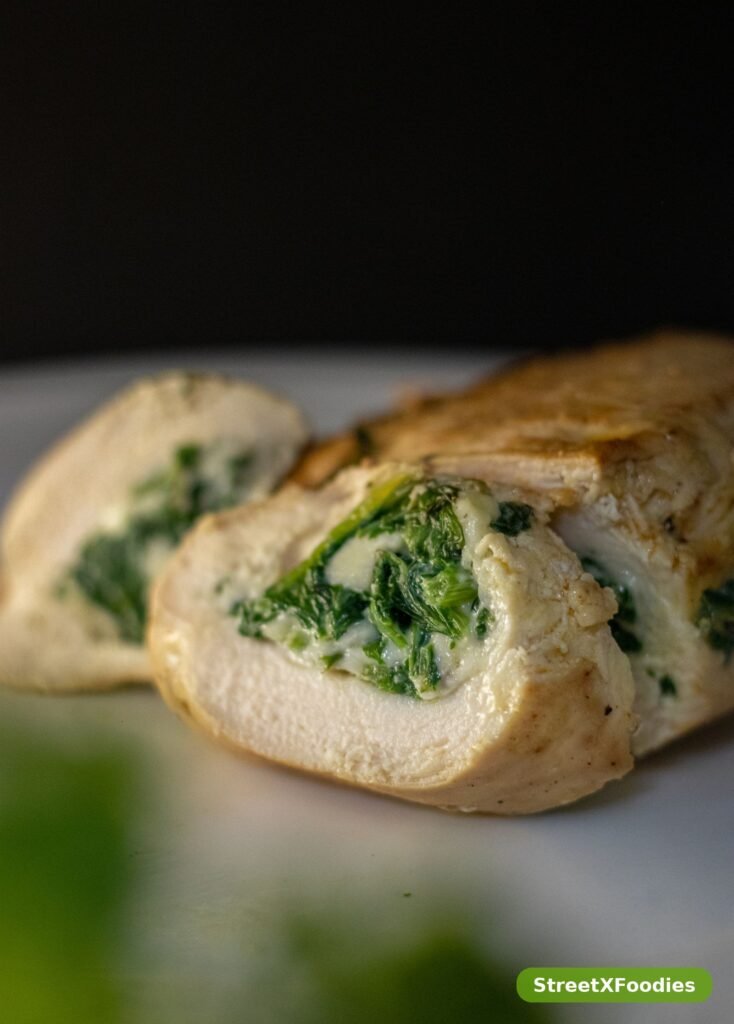
Now lay each flattened breast flat on your work surface and season it lightly with salt, pepper, and garlic powder. Lay two slices of ham on top, leaving a small border around the edges — about a centimetre all round. Then lay two slices of cheese on top of the ham, keeping them a little further in from the edges than the ham. This border matters, because when you roll it up, the cheese needs room to stay inside rather than squishing out of the ends. If your cheese slices are large, fold them in half so they sit neatly in the middle.
Rolling is the part that worries people, but it’s really just like rolling a small parcel. Start from the narrow end and roll the chicken up firmly but gently, tucking the sides in as you go, like you’re rolling a burrito. When you reach the end, the roll should be snug and even. Secure it with two or three toothpicks pushed through the seam, or tie it with kitchen string. Don’t worry if it doesn’t look perfect — the coating hides a multitude of sins, and once it’s baked and sliced, nobody will know. If a little cheese peeks out of the end, just tuck it back in.
Now set up your coating station. You’ll need three shallow dishes: one with the flour and paprika mixed together, one with the beaten eggs and a tablespoon of Dijon mustard whisked in, and one with the panko breadcrumbs and grated Parmesan mixed together. Working one roll at a time, coat it lightly in flour and shake off the excess, then dip it in the egg mixture, turning it to coat all over, then roll it in the breadcrumb mixture, pressing gently so the crumbs stick in an even layer. Set each coated roll on a plate as you go. If you have time, put the coated rolls in the fridge for twenty minutes — this helps the coating set and makes it less likely to fall off in the oven.
Heat the oven to 190°C (375°F). Lightly oil a baking tray or line it with parchment, and place the rolls seam-side down with a little space between them. Drizzle or brush the tops with olive oil or melted butter — this is what makes the crumbs turn golden and crisp in the oven rather than pale and dry. Bake for 25 to 30 minutes, until the coating is deep golden and the chicken reads 74°C (165°F) at the thickest part. If the crumbs are browning too fast, cover the tray loosely with foil for the last ten minutes.
While the chicken bakes, make the Dijon sauce. Melt the butter in a small saucepan over medium heat, then stir in the flour and cook for about a minute, stirring constantly, until it smells nutty and looks like a smooth paste. Slowly pour in the warm milk and the chicken stock, whisking all the time so no lumps form. Let it simmer gently for three or four minutes until it thickens enough to coat the back of a spoon. Take it off the heat and stir in both mustards, the cream, and the nutmeg. Taste and season with salt and white pepper. It should be smooth, creamy, and tangy, with the mustard flavour clear but not overpowering.
When the chicken is done, let it rest for five minutes before you slice it. This keeps the cheese from running out all at once and gives the meat a moment to relax. Pull out the toothpicks or cut the string, then slice each roll on a slight diagonal into thick pieces — two or three per portion — and arrange them on plates with the cut sides showing so people can see the layers. Spoon the warm Dijon sauce over the top or serve it in a jug on the side. And that’s it. Dinner is served, and it looks like you really know what you’re doing.
Tips for the Best Chicken Cordon Bleu
Pound the chicken thin and even. I know I’ve said it already, but it truly is the foundation of this recipe. A breast that’s 6 mm thick rolls easily, cooks evenly, and gives you neat layers of ham and cheese in every slice. A breast that’s still thick in the middle will fight you at every step — it won’t roll, it won’t cook through, and the cheese will burst out of the gaps. Put the effort in at the pounding stage and everything else becomes easy.
Keep the cheese away from the edges. This is the trick that stops the cheese from leaking out in the oven. Leave a clear border of bare chicken around the ham and cheese, and tuck the sides in as you roll. If cheese does escape during baking, it’s not a disaster — it just means a little less cheese inside and a crispy cheese edge on the tray, which is honestly delicious in its own right. But a little care at the rolling stage keeps most of it where it belongs.
Chill the coated rolls before baking if you have time. Twenty minutes in the fridge firms up the coating and helps it stick to the chicken instead of sliding off in the oven. It’s a small step that makes a noticeable difference to the final result, and it’s especially useful if you’re making them ahead. You can even coat them the night before and keep them covered in the fridge — just add a few extra minutes to the baking time if they go in cold.
Use panko breadcrumbs, not regular ones. Panko crumbs are larger, lighter, and crisper, and they stay crunchy in the oven in a way that fine breadcrumbs don’t. If you can only find regular breadcrumbs, they’ll still work, but the coating will be denser and less golden. Mixing in the Parmesan adds flavour and helps the crumbs brown, so don’t skip it. And don’t forget the drizzle of oil or butter on top — without it, the crumbs can taste dry and look pale.
Let the chicken rest before slicing. Five minutes is enough. If you cut into it straight out of the oven, the cheese will run out in a flood and you’ll lose the beautiful layered look. Resting lets the cheese set just slightly so it oozes slowly instead of pouring out, and the chicken stays juicier too. Use the time to finish the sauce and plate up the sides.
Variations to Try
If you want a different cheese, Gruyère is the classic upgrade — it melts beautifully and has a nutty, slightly sweet flavour that works wonderfully with ham. Emmental is another good choice, and a sharp cheddar gives a bolder, tangier result. Just avoid very soft cheeses like mozzarella, which melt too quickly and run out before the chicken is done, and avoid hard cheeses like Parmesan on their own, which don’t melt enough.
You can swap the ham for other fillings too. Prosciutto gives a saltier, more delicate flavour. Smoked turkey is a good lighter option. And for something different entirely, try a layer of sautéed spinach and mushrooms instead of ham — it makes a lovely vegetarian-friendly filling, though at that point it’s really a different dish. If you like the idea of creamy pasta alongside, my one-pan creamy spinach and artichoke pasta pairs beautifully with this chicken.
For a crunchier coating, mix some crushed cornflakes or crushed crackers into the panko. It sounds odd, but the extra crunch is wonderful and it browns beautifully. You could also add a teaspoon of dried herbs like thyme or oregano to the breadcrumb mixture, or a pinch of cayenne for a little warmth. And if you want a completely different crispy chicken experience, the street style chicken sandwich on this site takes the same golden-crumb idea in a handheld direction.
For a lighter version, skip the breadcrumbs entirely and bake the rolled chicken without a coating, brushing it with a little oil and Dijon mustard instead. You lose the crunch, but you get a cleaner, lighter dish that still has the ham and cheese surprise inside. Serve it with the same Dijon sauce and a big salad, and it’s a lovely weeknight dinner that feels special without being heavy.
Serving Ideas
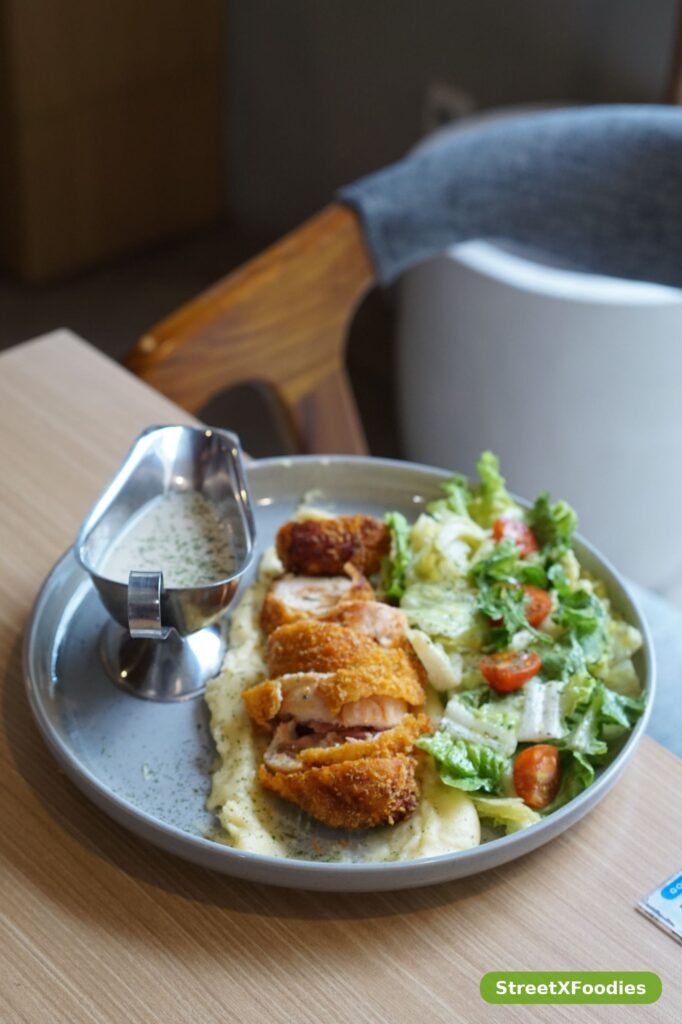
Mashed potatoes are the natural partner here — something soft and buttery for the Dijon sauce to pool into. Make them smooth and rich, and spoon the sauce generously over both the chicken and the potatoes. Green beans are another classic side; simply steamed or sautéed with a little garlic, they add colour and freshness and cut through the richness of the cheese and sauce.
Roasted vegetables work beautifully too. A tray of roasted carrots, parsnips, or sweet potatoes alongside adds sweetness and colour, and they can go in the oven at the same time as the chicken. A simple green salad with a sharp vinaigrette is the lightest option — the acidity balances the creamy sauce and the rich cheese. And if you’re feeding a crowd, add a basket of warm crusty bread for mopping up any sauce left on the plate.
For a dinner party, I’d serve this with mashed potatoes, green beans, and a bottle of something cold and white. Keep the rest of the meal simple — a light starter like my homemade street style chicken burger is too much as a starter, so go for something light like a small salad or soup instead. The chicken is rich enough to carry the evening on its own, and your guests will remember the moment you sliced it open and the cheese came out.
Storage and Reheating
Leftover chicken cordon bleu keeps in the fridge for two to three days in an airtight container. The coating will soften in the fridge, which is normal — you can crisp it back up when you reheat it. Store the Dijon sauce separately in a small container, because it reheats better on its own and you can control how much you use.
To reheat, the oven is by far the best option. Put the chicken on a tray, cover loosely with foil, and warm it at 180°C (350°F) for about 15 minutes. Take the foil off for the last five minutes so the coating crisps up again. Reheat the sauce gently in a small pan over low heat, stirring often, and add a splash of milk if it’s too thick. The microwave will work in a pinch, but the coating will go soft and the cheese can overheat and turn rubbery.
This dish doesn’t freeze brilliantly once it’s cooked, because the coating goes soggy and the cheese texture changes. But you can freeze the uncooked, coated rolls — wrap each one tightly in cling film and then foil, and they’ll keep for up to a month. Thaw overnight in the fridge and bake as normal, adding five minutes to the cooking time. It’s a great way to have a dinner-party dish ready to go on a busy day.
Frequently Asked Questions
How do I stop the cheese from leaking out?
The main trick is to keep the cheese well away from the edges when you fill the chicken, and to tuck the sides in as you roll. Use toothpicks or kitchen string to hold the roll closed, and chill the coated rolls in the fridge for twenty minutes before baking. If a little cheese still escapes, don’t worry — it’s normal, and the chicken will still taste wonderful. Using a firmer cheese like Swiss or Gruyère also helps, because it melts more slowly than soft cheeses.
Can I make chicken cordon bleu ahead of time?
Yes, and it’s one of the best things about this recipe. You can assemble and crumb the rolls up to a day ahead and keep them covered in the fridge. Bake them when you’re ready to eat, adding a few extra minutes since they’ll be cold going in. The Dijon sauce can also be made a few hours ahead and kept in the fridge — just reheat it gently and whisk in a splash of milk if it’s too thick. It’s an ideal dinner-party dish for exactly this reason.
Can I use chicken thighs instead of breasts?
It’s possible, but it’s trickier. Thighs are smaller and thinner, so they’re harder to pound flat and roll neatly. If you do try it, use large boneless, skinless thighs and pound them gently. The cooking time will be similar, but check the temperature carefully. Honestly, breasts are the better choice for this dish — their size and shape are what make the rolling work. For a thigh-based dinner instead, the BBC’s chicken recipes collection has plenty of options.
What cheese is best for cordon bleu?
Swiss cheese is the traditional choice, and it melts beautifully with a mild, nutty flavour. Gruyère is my personal favourite — it has more depth and a lovely savoury note. Emmental works well too. Avoid mozzarella, which melts too fast and runs out, and avoid very hard cheeses, which don’t melt enough. Whatever you choose, make sure it’s a good melting cheese, and slice it thinly so it layers neatly inside the roll.
Can I air fry chicken cordon bleu?
Yes, and it works very well. Cook the coated rolls in the air fryer at 190°C (375°F) for about 18 to 20 minutes, turning them halfway through, until the coating is golden and the chicken is cooked through. You may need to cook in batches. The air fryer gives you an extra-crispy coating, and it’s a good option if you don’t want to heat the whole oven. Just make sure the rolls are well secured with toothpicks so they don’t unroll.
What can I serve with chicken cordon bleu?
Mashed potatoes and green beans are the classic pairing, and they work perfectly with the Dijon sauce. Roasted vegetables, a simple green salad, or buttered noodles are all good options too. Serious Eats has a thorough chicken cordon bleu recipe with more serving ideas if you’d like to compare. Keep the sides simple and let the chicken and its creamy sauce be the stars of the plate.