
Classic Tiramisu with Mascarpone Cream
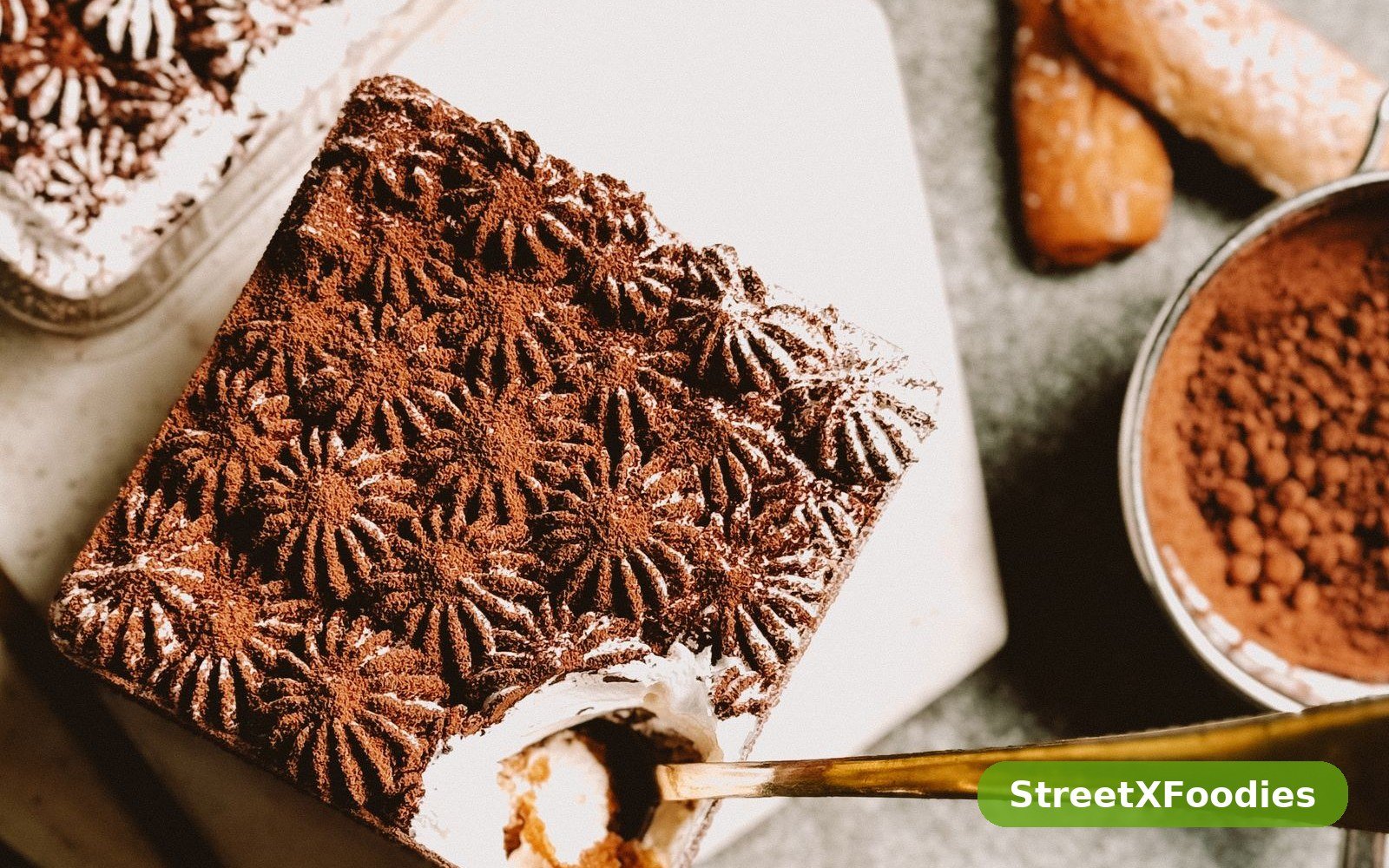
Tiramisu is one of those desserts that sounds far more complicated than it actually is. I remember the first time I ordered it in a restaurant, years ago, and thinking it must have taken a pastry chef hours to make — all those neat layers, that cloud of mascarpone, that dusting of cocoa that somehow stayed perfect on top. Then I made it at home for the first time, and I realised the truth: tiramisu is mostly a matter of dipping, layering, and waiting. There is no baking, no complicated technique, and no need for any special equipment. The fridge does most of the work for you.
The name itself tells you what this dessert is about. Tiramisu means pick me up in Italian, and it is a fitting name, because there is something about a cold spoonful of coffee-soaked sponge and sweet mascarpone cream that genuinely lifts your spirits. It is the dessert I make when I want to impress people without stressing myself out, the one I bring to dinner parties when I need something that looks elegant and tastes like a restaurant dessert but can be made the day before, in my own kitchen, in my pyjamas if I want to.
What makes a good tiramisu, in my experience, is balance. The ladyfingers should be soaked enough to be soft and full of coffee flavour, but not so wet that they fall apart. The mascarpone cream should be rich and sweet, but not cloying, with a little lift from the whipped cream or egg whites. The cocoa on top should be bitter enough to contrast with the sweetness underneath. When those three things are in balance, every spoonful is a little bit of heaven — coffee, cream, cocoa, and that soft, yielding sponge all at once.
This is my classic version, the one I have made more times than I can count, and it has never let me down. It uses proper mascarpone, good strong coffee, and crisp ladyfingers, and it sets up beautifully in the fridge overnight. If you have never made tiramisu before, do not be nervous. It is forgiving, it is simple, and it is one of the most rewarding desserts you will ever make at home.
Why You’ll Love This Recipe
The first thing you will love about this tiramisu is that there is no baking involved. No oven, no worrying about whether a cake has risen properly, no risk of a burnt edge or a sunken middle. You make a cream, you dip some biscuits in coffee, you layer them up, and you put the dish in the fridge. That is genuinely the whole process, and it means this is a dessert you can make in the middle of summer without heating up the kitchen, or on a busy day when the oven is already occupied with dinner.
You will also love that it is a make-ahead dessert, and in fact it is better when it is made ahead. Tiramisu needs time in the fridge for the flavours to meld together — the coffee soaks deeper into the ladyfingers, the cream firms up, and the whole dessert becomes more cohesive and more delicious. Making it the night before a dinner party is not just convenient, it is actively better, which is a rare and wonderful thing in the world of desserts. It takes all the pressure off the day itself.
Then there is the taste, which is honestly hard to describe without sounding like I am exaggerating. The mascarpone cream is silky and rich without being heavy, the coffee gives it a deep, slightly bitter edge, and the cocoa dusting on top adds a final, dark note that ties everything together. It is sweet, but not too sweet. It is creamy, but not cloying. It is the kind of dessert that makes people close their eyes for a second when they take the first spoonful, and that is always a good sign.
Finally, this recipe is wonderfully adaptable. You can make it in a large dish for a crowd, in individual glasses for a dinner party, or in a small dish for a family of four. You can leave out the alcohol entirely, or add a splash of coffee liqueur if you like. You can make it with decaf coffee for children or for an evening dessert. Once you have the basic method down, you will find yourself making it again and again, for birthdays, for holidays, for ordinary Tuesdays that need a little lift.
Ingredients You’ll Need
- 1 1/2 cups mascarpone cheese, at room temperature
- 1 1/2 cups heavy whipping cream, cold
- 3/4 cup granulated sugar
- 1 teaspoon vanilla extract
- 4 large egg yolks, at room temperature
- 1 1/2 cups strong brewed coffee or espresso, cooled to room temperature
- 2 tablespoons coffee liqueur, optional — Kahlua or Tia Maria work well
- 24 crisp ladyfingers, also called savoiardi
- 3 tablespoons unsweetened cocoa powder, for dusting
- 1 ounce dark chocolate, finely grated, optional, for serving
- A pinch of salt
How to Make Classic Tiramisu with Mascarpone Cream
Start by brewing your coffee and letting it cool completely, because hot coffee will make the ladyfingers fall apart and will melt the cream. I like to brew a strong pot of coffee or pull a few shots of espresso, then pour it into a wide, shallow bowl and leave it on the counter while I make the cream. If you are using coffee liqueur, stir it into the cooled coffee now. The bowl should be wide enough to dip a ladyfinger in comfortably without breaking it, and shallow enough that you can control how much coffee it soaks up.
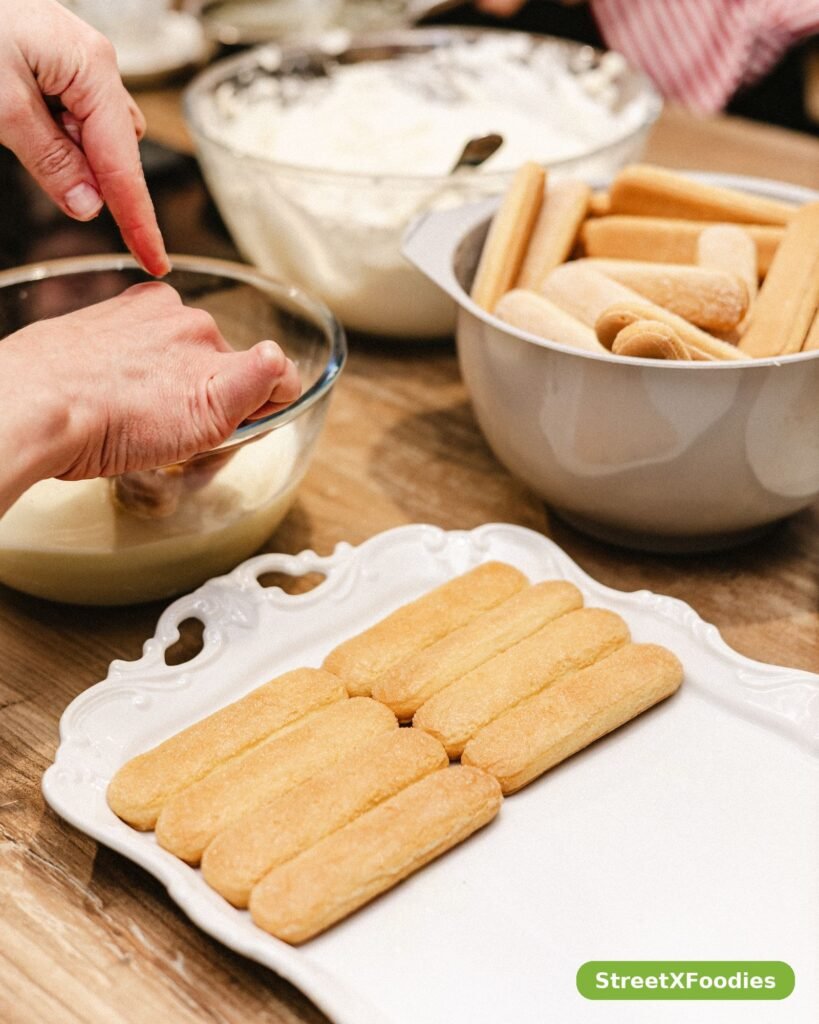
Now make the mascarpone cream, which is the heart of the whole dessert. In a large bowl, whisk the egg yolks and sugar together until the mixture turns pale, thick, and creamy — this takes about three to four minutes by hand, or about two minutes with an electric whisk. You are not cooking the yolks here, just beating them until they are light and fluffy, and that air you beat in is what gives the cream its lovely, mousse-like texture. Add the vanilla and a pinch of salt, then add the mascarpone, a spoonful at a time, whisking gently until the mixture is completely smooth. The mascarpone should be at room temperature, because cold mascarpone can turn lumpy when you try to mix it, and lumps are the one thing you do not want in a silky cream.
In a separate, clean bowl, whip the cold heavy cream until it forms soft peaks — that is, when you lift the whisk, the cream holds its shape but the tip flops over gently. Be careful not to over-whip it, because cream that has gone too far will turn grainy and buttery, and it will not fold into the mascarpone smoothly. Fold the whipped cream into the mascarpone mixture in two or three additions, using a large spoon or spatula and a gentle, sweeping motion. You want to keep as much air in the mixture as possible, so fold rather than stir, and stop as soon as the cream is evenly incorporated and there are no streaks left.
Now comes the fun part: assembling the tiramisu. Take a ladyfinger and dip it into the cooled coffee for just one or two seconds on each side — a quick dip, not a soak. The ladyfinger should be damp and coffee-flavoured, but still holding its shape, and you should be able to pick it up without it bending or breaking. Lay it in the bottom of your dish, and repeat with more ladyfingers until you have a single, snug layer covering the bottom. You may need to break a few ladyfingers to fill in the gaps at the edges, and that is completely fine — nobody will see the joins once the cream goes on top.
Spread half of the mascarpone cream over the layer of ladyfingers, using a spatula to smooth it into an even layer that reaches right into the corners. Then repeat the whole process: another quick dip for each ladyfinger, another snug layer, and the remaining half of the cream spread smoothly over the top. Take your time with this top layer, because it is the one everyone will see, and a smooth, even surface looks far more elegant than a hastily smeared one. Run the spatula across it a few times until it looks neat and level.
Cover the dish tightly with cling film or a lid, and put it in the fridge for at least six hours, though overnight is better. This waiting time is not optional — it is when the magic happens. The ladyfingers soften further, the cream firms up and sets, and the coffee, cream, and cocoa flavours meld together into something far greater than the sum of its parts. If you try to serve it after only an hour or two, it will still taste good, but it will be soft and sloppy, and the layers will slide apart when you try to serve it. Patience is the secret ingredient here.
Just before serving, dust the top generously with cocoa powder, using a fine sieve to get an even, velvety coating. Do this at the last minute, because the cocoa will absorb moisture from the cream if it sits for too long, and it will lose that beautiful, powdery finish. If you like, scatter a little finely grated dark chocolate over the top as well. Slice the tiramisu with a sharp knife, wiping the blade clean between slices, and serve it cold, straight from the fridge. If you want a deeper dive into the technique, this tiramisu recipe from King Arthur Baking explains the method beautifully, and their tips on ladyfingers are especially helpful.
Tips for the Best Classic Tiramisu with Mascarpone Cream
The most important tip is to use crisp ladyfingers, the hard, dry kind sold as savoiardi, not the soft, cake-like ones. Crisp ladyfingers hold their shape when dipped in coffee and soften slowly in the fridge, giving you distinct, tender layers. Soft ladyfingers turn to mush almost immediately, and your tiramisu will end up more like a trifle than a proper layered dessert. If you can only find soft ladyfingers, dip them even more briefly — a half-second per side — and accept that the texture will be softer.
Use mascarpone at room temperature, and do not try to substitute cream cheese. Cream cheese is tangier, denser, and much firmer than mascarpone, and while it can make a perfectly pleasant dessert, it will not taste like tiramisu. Mascarpone is buttery, mild, and silky, and it is what gives tiramisu its characteristic richness. If your mascarpone is cold from the fridge, let it sit on the counter for thirty minutes before you start, and whisk it briefly on its own to smooth it out before you add it to the yolks.
Dip, do not soak. This is the mistake I see most often, and it is the one that ruins more tiramisus than any other. A ladyfinger dipped for one or two seconds per side will absorb enough coffee to be flavourful and soft, but it will still hold its shape. A ladyfinger left in the coffee for five seconds will be saturated, soggy, and likely to fall apart in your fingers, and your finished dessert will be wet and sloppy. When in doubt, dip less — the ladyfingers will continue to soften in the fridge overnight, so they do not need to be fully soaked at the assembly stage.
Let it chill overnight if you possibly can. Six hours is the minimum, but eight to twelve hours is ideal, and twenty-four hours is even better. The flavours deepen, the texture firms up, and the slices hold their shape beautifully. If you are making tiramisu for a Saturday dinner, make it on Friday evening and forget about it until Saturday. And dust the cocoa on just before serving, for the same reason — a fresh dusting looks and tastes far better than one that has been sitting on the cream all night, absorbing moisture.
Variations to Try
If you would like a little extra indulgence, add two tablespoons of coffee liqueur to the coffee, as I have suggested in the ingredients, or a tablespoon of dark rum for a warmer, more complex flavour. The alcohol is entirely optional — the tiramisu is wonderful without it — but a splash does deepen the coffee flavour in a way that is hard to replicate. If you are serving children, leave it out entirely, and nobody will miss it. You can also make a chocolate version by adding a tablespoon of cocoa powder to the mascarpone cream, or by layering in some finely chopped dark chocolate between the layers.
For a fruit version, which is lovely in summer, replace the coffee with a fruit purée or juice. A strawberry tiramisu, made with fresh strawberries macerated in a little sugar and lemon juice, is a beautiful alternative, and a lemon tiramisu, made with lemon curd folded into the mascarpone cream, is bright and refreshing. The method stays exactly the same — dip, layer, chill — only the soaking liquid changes, which shows you just how versatile this basic recipe really is.
Individual servings are a wonderful option for a dinner party. Layer the tiramisu in small glasses, ramekins, or jam jars, using broken ladyfingers to fit the shape, and chill them in the fridge. They look elegant, they are easy to serve, and everyone gets their own perfect portion with no slicing required. A glass version also lets you see the layers, which is half the pleasure of tiramisu. If you enjoy make-ahead desserts, you will also love these homemade cinnamon rolls with cream cheese frosting, which use a similar creamy frosting and are just as comforting.
Serving Ideas
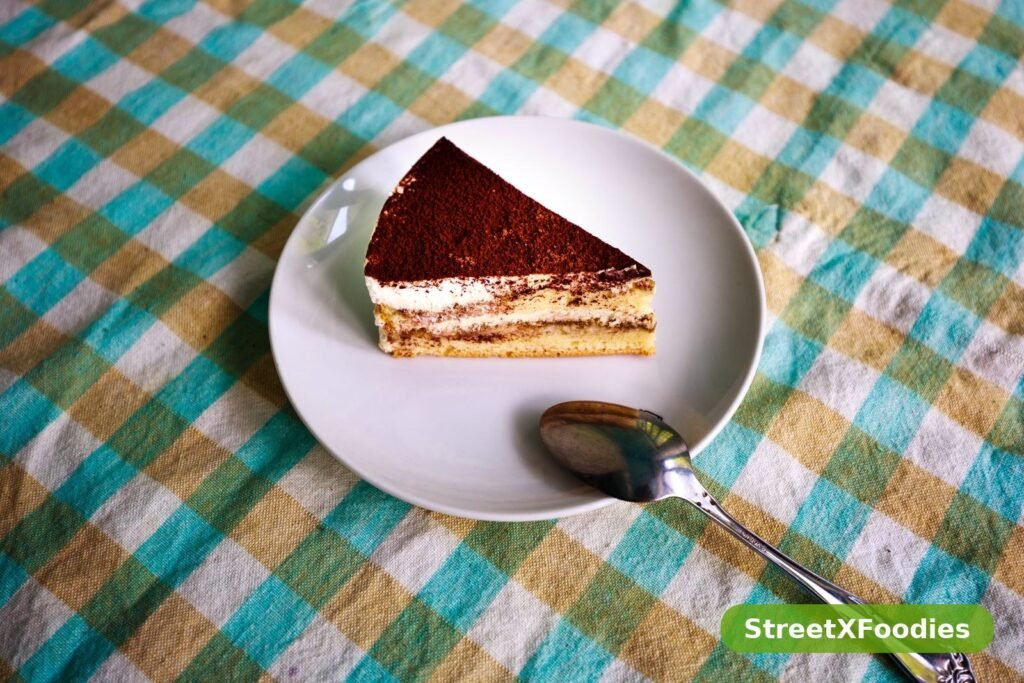
Tiramisu is a complete dessert on its own, and it needs very little alongside it. I serve it cold, straight from the fridge, in generous slices, with a cup of strong coffee or espresso. The coffee echoes the flavour in the dessert and makes the whole experience feel like a proper Italian café moment. A small glass of dessert wine or coffee liqueur is lovely for adults, and a pot of tea works just as well if coffee feels like too much caffeine for the evening.
For a dinner party, I like to serve tiramisu as the final course after a lighter main, because it is rich enough to feel indulgent but light enough not to overwhelm. It pairs beautifully with a simple main course — if you are planning a full menu, these easy street food recipes at home make a fun, flavourful start to the evening, and the tiramisu provides a calm, elegant finish. A few fresh berries on the side add colour and a tart contrast, and a dusting of extra cocoa on the plate looks very professional.
If you are serving tiramisu at a larger gathering, make it in a big dish and let people help themselves, or make two smaller dishes so you can keep one in the fridge while the first is being served. It is a dessert that invites second helpings, so always make a little more than you think you will need — in my experience, it disappears faster than any other dessert I make.
Storage and Reheating
Tiramisu is a fridge dessert, and it should always be stored in the fridge, covered tightly with cling film or a lid. It will keep well for three to four days, and in my opinion it tastes best on the second day, when the flavours have had a full night to meld. After the third day the ladyfingers can start to get a little too soft, though it will still taste good. Always keep it refrigerated, and do not leave it sitting out at room temperature for more than two hours, especially in warm weather, because the cream and eggs need to stay cold.
I do not recommend freezing tiramisu, though it can be done in a pinch. The texture of the mascarpone cream changes when it is frozen and thawed — it can turn slightly grainy, and the ladyfingers can become watery. If you do freeze it, wrap it very tightly in cling film and then in foil, freeze it for up to a month, and defrost it overnight in the fridge. It will not be quite as good as fresh, but it will still be a perfectly enjoyable dessert, and the cocoa dusting should be added fresh after defrosting.
There is no reheating involved with tiramisu, of course — it is served cold, and that is part of its charm. If you have taken it out of the fridge to serve it, put any leftovers straight back in the fridge as soon as you can. And if you have dusted the top with cocoa, be aware that the cocoa will darken and absorb moisture over time, so if you are storing leftovers, the top may not look quite as pretty the next day. A fresh dusting of cocoa before serving the leftovers will fix that in seconds.
Frequently Asked Questions
Can I make tiramisu without raw eggs?
This recipe uses raw egg yolks in the cream, which is traditional, and it is safe for most people as long as you use fresh, good-quality eggs from a reliable source. If you are concerned, or if you are serving pregnant women, young children, or anyone with a weakened immune system, you can use pasteurised egg yolks, which are available in most supermarkets. Alternatively, you can make an eggless version by leaving the yolks out entirely and increasing the whipped cream by half a cup — the cream will be slightly less rich, but still delicious and completely safe.
What is the best coffee to use for tiramisu?
Strong, good-quality coffee is essential, because it is the main flavour in the dessert. Espresso is ideal, but a strong pot of filter coffee or a French press coffee will work well too. Use a dark roast if you can, and make it stronger than you would for drinking — the coffee flavour needs to stand up to the rich mascarpone cream. Avoid instant coffee if you possibly can, as it can taste flat and slightly bitter, though in a pinch a strong instant coffee is better than no coffee at all. Decaf works perfectly if you prefer it.
Why is my tiramisu runny?
A runny tiramisu is usually caused by over-soaked ladyfingers, under-whipped cream, or not enough chilling time. Make sure you are dipping the ladyfingers for only a second or two per side, whip the cream to soft peaks before folding it in, and give the tiramisu at least six hours in the fridge — overnight is better. If you have used soft ladyfingers instead of crisp savoiardi, that can also cause a runny result. Next time, try chilling it for a full twenty-four hours, and make sure your mascarpone was at room temperature when you mixed it.
Can I make tiramisu ahead of time?
Yes, and you absolutely should. Tiramisu is one of the best make-ahead desserts there is, because it improves with time in the fridge. Make it the day before you plan to serve it, cover it tightly, and leave it in the fridge overnight. It will keep for three to four days in total, and it tastes best on the second day. Just remember to dust the cocoa on at the last minute, right before serving, so it stays powdery and beautiful. For more make-ahead inspiration, these quick street food recipes with simple ingredients are also great for planning ahead.
Can I use cream cheese instead of mascarpone?
You can, but the result will taste different. Cream cheese is tangier and denser than mascarpone, and it will give the dessert a cheesecake-like flavour rather than a classic tiramisu flavour. If you do use cream cheese, let it come to room temperature, beat it until it is completely smooth, and consider adding an extra tablespoon of sugar to balance the tang. It will still be a delicious dessert, but if you want the authentic taste, mascarpone is worth seeking out — most supermarkets now stock it in the cheese aisle.
How do I get clean slices of tiramisu?
Clean slices come down to two things: proper chilling and a sharp knife. Make sure the tiramisu has chilled for at least six hours, preferably overnight, so the cream is firm and the layers are set. Use a long, sharp knife, dip it in hot water, wipe it dry, and cut straight down in one smooth motion. Wipe the blade clean between each slice, and dip it in hot water again if it starts to drag. For a beautiful presentation, serve each slice on a chilled plate with a dusting of cocoa, and if you love chocolate desserts, these chocolate lava cakes with molten centers are another showstopper worth trying. If you want to compare methods, Serious Eats’ tiramisu recipe is a useful reference.
2 thoughts on “Classic Tiramisu with Mascarpone Cream”